
Long hours on a bicycle can lead to perineal numbness, soft-tissue pressure, and persistent discomfort. Finding the right saddle to reduce pelvic press can therefore make a significant difference for cyclists who struggle with soreness during extended outdoor rides or indoor training sessions.
This guide compares saddle width, pressure-relief channels, padding density, suspension systems, rail construction, and riding-position compatibility to help you choose an option suited to your bike and riding style.
Quick Comparison Table
| Product | Best For | Editor’s Rating | Price |
|---|---|---|---|
| ROCKBROS Bike Seat Cushion with Dual Shock Absorbing Ball | Best Overall Comfort — Indoor exercise-bike users and casual outdoor riders seeking wide cushioning and effective vibration absorption. | ★★★★★ | Check Latest Price |
| HUGEOAKS Width Adjustable Bike Seat | Best Width Adjustability — Riders who want customizable sit-bone support and a saddle width that can be fine-tuned to their anatomy. | ★★★★★ | Check Latest Price |
| Cloud-9 Cruiser Select Comfort Saddle | Best Vibration Dampening — E-bike commuters and upright cruiser riders who regularly travel over rough or uneven paved surfaces. | ★★★★★ | Check Latest Price |
| VELMIA Bicycle Saddle with 3 Zone Concept | Best Ergonomic Value — Trekking and city-bike riders seeking supportive memory foam, ventilation, and waterproof construction. | ★★★★★ | Check Latest Price |
| ISM PM 2.0 Mountain Bike Seat | Best High-Performance — Mountain bikers and active trail riders who need a streamlined pressure-relief design with greater freedom of movement. | ★★★★★ | Check Latest Price |
Saddles to Reduce Pelvic Press: What Really Matters First
Before selecting a new bicycle seat, riders should understand how saddle geometry interacts with riding posture and individual anatomy.
A poorly matched saddle can concentrate weight on sensitive soft tissues instead of distributing it across the rider’s sit bones. For this reason, ergonomic shape and correct sizing generally matter more than simply choosing the thickest or softest padding.
The primary goal is to provide stable support beneath the ischial tuberosities, commonly called the sit bones, while reducing unnecessary pressure through the center of the saddle.
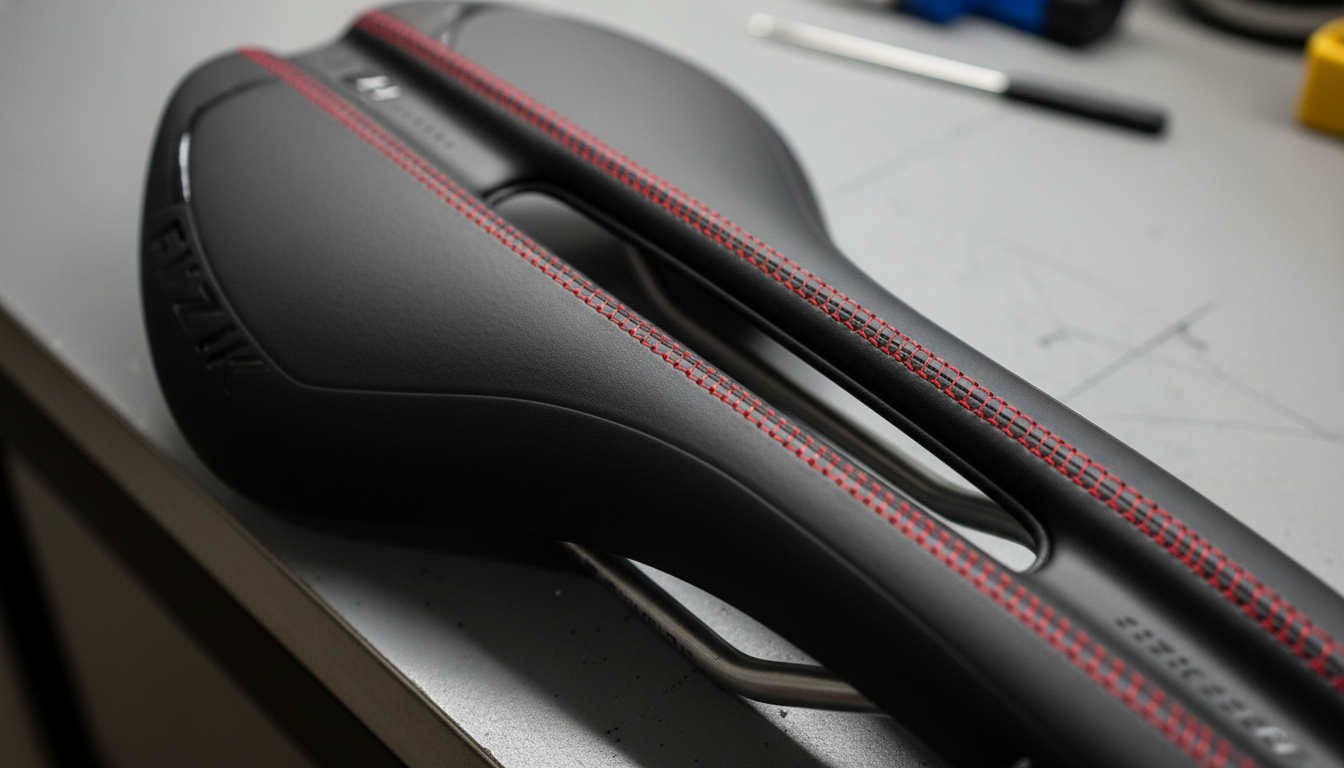
Structural features such as central relief channels, cutouts, split profiles, noseless designs, and suspension systems can help reduce localized pressure and absorb vibration.
- Saddle Width and Shape: The rear platform should provide sufficient support for your sit-bone width without interfering with leg movement.
- Pressure-Relief Design: Central channels, cutouts, or shortened noses can reduce direct contact with sensitive areas.
- Padding Density: Firm, supportive foam generally maintains its shape better than excessively soft cushioning.
- Riding Position: Upright riders usually need wider support, while forward-leaning cyclists typically benefit from narrower profiles.
- Suspension: Elastomers, springs, and flexible rails can help isolate the rider from repeated road vibration.
Key Buying Factors
| Factor | Why It Matters | What To Check |
|---|---|---|
| Saddle Width and Shape | Proper width helps place more of the rider’s weight on the sit bones rather than surrounding soft tissue. | Look for clearly stated width measurements or an adjustable-width mechanism that suits your build. |
| Relief Channel Depth | A central opening or recessed channel can reduce direct pressure and improve ventilation. | Check for a full or partial ergonomic cutout, split profile, or deep center channel. |
| Padding Density | Supportive padding should resist excessive compression during longer rides. | Look for high-density memory foam, multi-stage foam, or similarly resilient padding. |
| Rail Construction | Rails support the rider’s weight and influence durability and vibration absorption. | Look for chromoly steel, spring steel, or another durable rail material suited to your riding style. |
| Riding Position | Saddle shape needs to match how upright or forward-leaning you are on the bicycle. | Wider saddles generally suit upright riding; slimmer designs typically allow more freedom during active cycling. |
Product Recommendations
The saddles below were selected for riders looking for better pressure distribution, sit-bone support, vibration control, and greater comfort across different cycling styles.
Each option provides a different advantage, ranging from wide cushioning and adjustable support to streamlined pressure-relief designs for more active riders.
1. ROCKBROS Bike Seat Cushion with Dual Shock Absorbing Ball
Status: Best Overall Comfort
A wide, ergonomically shaped saddle featuring substantial padding and a multi-zone pressure-relief design, making it a practical replacement for uncomfortable stock seats on stationary bikes, cruisers, and casual bicycles.
Product Snapshot
- Best For: Indoor exercise-bike users and casual outdoor riders.
- Standout Factor: The upgraded 3-zone pressure-relief system combined with dual shock-absorbing balls.
- Watch Point: Its wide rear profile may interfere with leg movement for cyclists using aggressive, forward-leaning positions.
Based on the provided product specifications, this saddle uses a generous layer of high-density memory foam designed to conform to the rider while spreading pressure across a broader contact area.
The exterior consists of wear-resistant polyurethane PU leather with a textured anti-slip surface. Its approximate dimensions of 10.2 inches by 8.6 inches create a broad rear support platform suited to riders who prefer a wider saddle.
Underneath the saddle, dual shock-absorbing balls help isolate the rider from repeated road vibration and impacts.
A rear safety handle can make moving a stationary or heavier bicycle more convenient, while the integrated reflective strip adds visibility when riding in lower-light conditions.
Why It May Work
- The 3-zone pressure-relief design helps reduce concentrated pressure through the saddle’s center.
- High-density memory foam provides supportive cushioning without relying solely on extreme softness.
- Dual shock-absorbing balls help reduce vibration from rough surfaces.
- The water-resistant PU cover improves practicality in changing weather.
- A universal mounting arrangement supports installation on many common seat posts.
Possible Limits
- The broad rear profile is less suitable for aggressive racing positions.
- It is heavier and bulkier than minimalist performance saddles.
- Riders with narrow sit-bone spacing may find the platform wider than necessary.
Key Features
- High-density memory foam padding
- Dual shock-absorbing balls
- 3-zone pressure-relief design
- Polyurethane PU leather cover
- Integrated reflective strip
- Rear safety handle
- Universal mounting system
2. HUGEOAKS Width Adjustable Bike Seat
Status: Best Width Adjustability
A customizable saddle that allows riders to alter the width of the rear support area, helping accommodate different sit-bone spacing instead of relying on a fixed saddle width.
Product Snapshot
- Best For: Riders seeking more precise sit-bone alignment and adjustable support.
- Standout Factor: A three-stage width-adjustment mechanism spanning approximately 180 mm to 220 mm.
- Watch Point: Setting the wings too wide may interfere with inner-thigh movement.
Sourced specifications indicate that this saddle uses a split construction extending through much of its length, allowing the two rear sections to adjust according to the rider’s preferred width.
The three listed settings are approximately 7.08 inches, 7.87 inches, and 8.66 inches, giving riders a wider range of fit options than a conventional fixed-width saddle.
Structural support comes from 304 spring steel, selected to resist deformation while providing some natural flex under load.
The saddle also incorporates high-density memory foam, helping support the sit bones while limiting excessive compression against the underlying base.
The combination of adjustable width and a split rear profile may be particularly useful for riders who have struggled to achieve proper alignment on standard one-size saddle designs.
Why It May Work
- Three adjustable width settings make it easier to match the saddle to different sit-bone spans.
- The split-tail configuration reduces material through the center of the saddle.
- 304 spring-steel support provides durability and some vibration absorption.
- High-density memory foam provides a supportive contact surface.
Possible Limits
- Adjustment hardware adds additional weight.
- The widest setting may interfere with riders who have a narrower build.
- Finding the ideal width may require experimentation over several rides.
Key Features
- Three width settings from approximately 180 mm to 220 mm
- Split-tail ergonomic construction
- 304 spring-steel support
- High-density memory foam
- Universal mounting adapter
3. Cloud-9 Cruiser Select Comfort Saddle
Status: Best Vibration Dampening
A large comfort saddle combining multi-stage foam with an elastomer suspension system, making it especially well suited to upright riding and rougher paved surfaces.
Product Snapshot
- Best For: E-bike commuters, cruiser riders, and cyclists who prioritize vibration isolation.
- Standout Factor: The elastomer suspension system, which replaces exposed traditional coil springs.
- Watch Point: Its large footprint and weight make it less suitable for lightweight performance builds.
Sourced specifications indicate that this model measures approximately 11.25 inches by 9 inches, providing a substantial support platform for upright cycling.
Its surface uses a water-resistant soft-touch vinyl material, while the interior contains multi-stage foam designed to support different areas of the saddle.
Instead of traditional exposed coil springs, Cloud-9 uses elastomer suspension components beneath the saddle.
These elastomers absorb repeated vibration while avoiding some of the squeaking and corrosion concerns associated with exposed metal coils.
A pronounced central comfort channel runs along the saddle and reduces direct contact through the center while also creating additional ventilation.
Why It May Work
- Elastomer suspension helps isolate road vibration.
- The central comfort channel reduces direct pressure through the middle of the saddle.
- Multi-stage foam provides a broad, supportive platform.
- The water-resistant outer cover improves everyday practicality.
Possible Limits
- It weighs more than two pounds according to the provided specifications.
- The large profile can appear oversized on streamlined road bicycles.
- It is best suited to relatively upright riding positions.
Key Features
- Multi-stage foam padding
- Elastomer suspension system
- Soft-touch water-resistant vinyl cover
- Anatomical central comfort channel
- Protective side bumpers
- Wide cruiser-oriented profile
4. VELMIA Bicycle Saddle with 3 Zone Concept
Status: Best Ergonomic Value
A hybrid-oriented saddle built around a three-zone ergonomic concept, memory foam, ventilation, and waterproof construction for riders who want a balance between comfort and everyday practicality.
Product Snapshot
- Best For: Trekking, hybrid, and city-bike commuters.
- Standout Factor: The three-zone ergonomic layout combined with welded waterproof seams.
- Watch Point: The padding has a firmer, supportive feel rather than an extremely soft cushion.
Based on the provided specifications, this saddle measures approximately 9 inches wide and 10.4 inches long, positioning it between an oversized cruiser saddle and a narrow performance model.
Its interior incorporates Memory Foam 3.0, designed to respond to heat and pressure and conform around the rider’s primary contact points.
A central ventilation slot creates an open section through the saddle, helping improve airflow while reducing direct contact through the middle.
The exterior uses welded waterproof seams, helping keep moisture away from the internal padding when riding or storing the bicycle in wet conditions.
Its medium-width shape makes it particularly suitable for cyclists who ride in a moderately upright trekking or commuting position.
Why It May Work
- The three-zone ergonomic layout divides support across different contact areas.
- Memory foam provides adaptive but supportive cushioning.
- The central ventilation slot improves airflow and reduces material through the saddle’s center.
- Welded seams improve water resistance.
Possible Limits
- Riders looking for an extremely plush cushion may find the padding too firm.
- Some fabrics or cycling shorts may interact differently with the surface texture.
- Very aggressive road riders may prefer a narrower profile.
Key Features
- Memory Foam 3.0 padding
- Three-zone ergonomic layout
- Central air-ventilation slot
- Welded waterproof seams
- Medium-width hybrid profile
- Mounting clamp and instructions included
5. ISM PM 2.0 Mountain Bike Seat
Status: Best High-Performance
A performance-focused mountain-bike saddle featuring a shortened, noseless-style front profile intended to reduce central pressure while preserving freedom of movement during technical riding.
Product Snapshot
- Best For: Mountain bikers, trail riders, and cyclists using an aggressive riding position.
- Standout Factor: The distinctive noseless pressure-relief design.
- Watch Point: Its firm performance-oriented shape may require an adjustment period.
Sourced specifications list dimensions of approximately 260 mm long and 130 mm wide.
The saddle’s relatively narrow shape and rounded, sloping rear are intended to allow riders to move behind the saddle more easily during technical descents.
Padding consists of ISM’s 30-series foam, which provides firmer support than the thick memory foam commonly used in cruiser saddles.
The structural foundation uses chromoly steel rails, providing a balance between strength, durability, and vibration resistance.
Its shortened front design substantially reduces the amount of saddle material beneath the rider’s central soft-tissue area compared with a traditional long-nose saddle.
For cyclists who regularly ride in an aggressive forward position, this geometry may provide a more suitable pressure-relief approach than simply choosing a wider or softer conventional seat.
Why It May Work
- The shortened noseless-style profile reduces material through the front-center contact area.
- The narrow shape provides greater freedom for active leg movement.
- A sloped rear helps prevent the saddle from interfering with body movement on technical terrain.
- Chromoly steel rails provide a strong structural foundation.
- Firm 30-series foam is designed for athletic support.
Possible Limits
- The firmer design can require several rides to become familiar.
- It costs more than many basic comfort saddles.
- Upright recreational riders may prefer a wider rear platform.
Key Features
- Noseless pressure-relief profile
- 30-series foam padding
- Chromoly steel rails
- Rounded and sloped rear section
- Waterproof faux-leather cover
- Performance-oriented 130 mm width
Buying Guide
Choosing the right saddle is not simply a matter of buying the softest seat available.
The best option depends on your riding posture, sit-bone spacing, saddle width, padding density, pressure-relief design, suspension requirements, and the type of bicycle you ride most often.
Match The Product To Daily Use
Selecting an appropriate saddle begins with matching its shape and padding to your primary riding style.
An upright cruiser or indoor exercise bike places a greater proportion of the rider’s body weight over the rear of the saddle. This generally makes a broader support platform useful.
A road cyclist or mountain biker typically leans farther forward and moves more aggressively on the bicycle. These riders often benefit from a narrower saddle because it provides additional inner-thigh clearance.
- Choose a wider, supportive saddle for upright cruiser or exercise-bike riding.
- Consider a narrower profile for road, trail, or other forward-leaning cycling positions.
- Check whether the saddle’s mounting system is compatible with your bicycle or indoor trainer.
- Select suspension or extra vibration control if your routes include rough pavement.
Check Build Quality Before Style
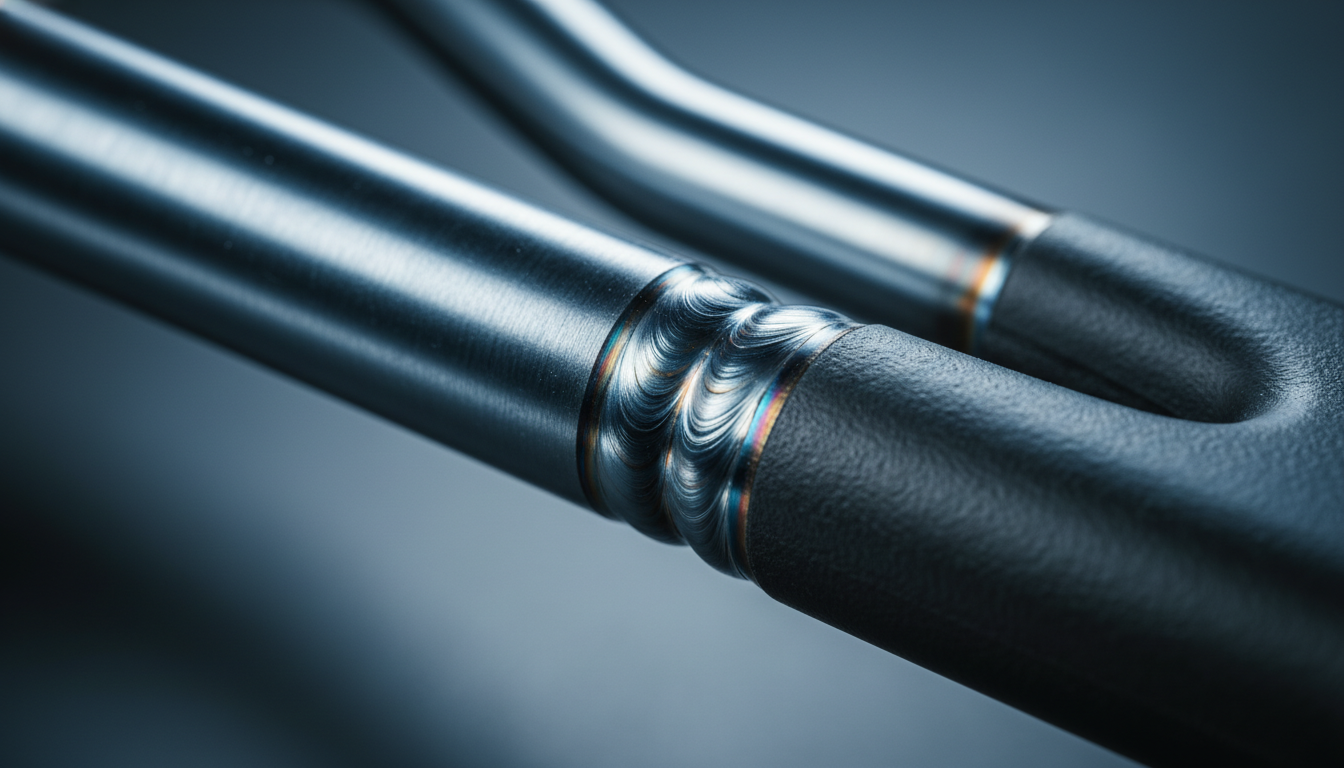
A saddle’s internal framework, base, and rails determine how well it maintains its shape under repeated use.
The rails are the primary load-bearing connection between the saddle and seat post. Materials such as chromoly steel and 304 spring steel provide strength while retaining some resilience under impact.
The underlying saddle shell should also be sufficiently rigid to support the rider while providing enough flexibility for comfort.
- Look for chromoly steel rails on performance-oriented saddles.
- Consider spring steel when strength and vibration absorption are priorities.
- Check the condition and quality of the mounting hardware.
- Look for an impact-resistant saddle base that does not flex excessively.
Look For Fit, Size, And Setup
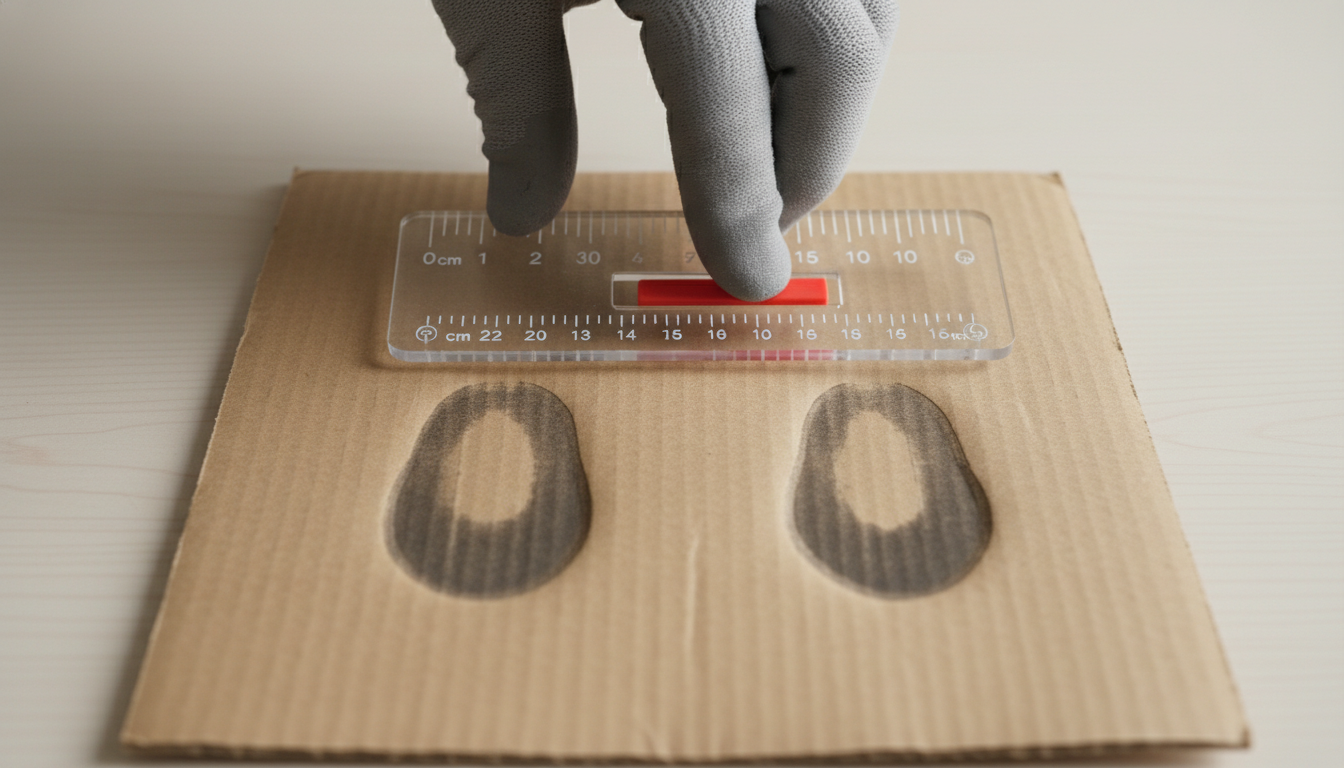
Even a well-designed ergonomic saddle may feel uncomfortable when its width or position does not match the rider.
The rear support platform should be wide enough for the sit bones without being so wide that it interferes with the thighs during pedaling.
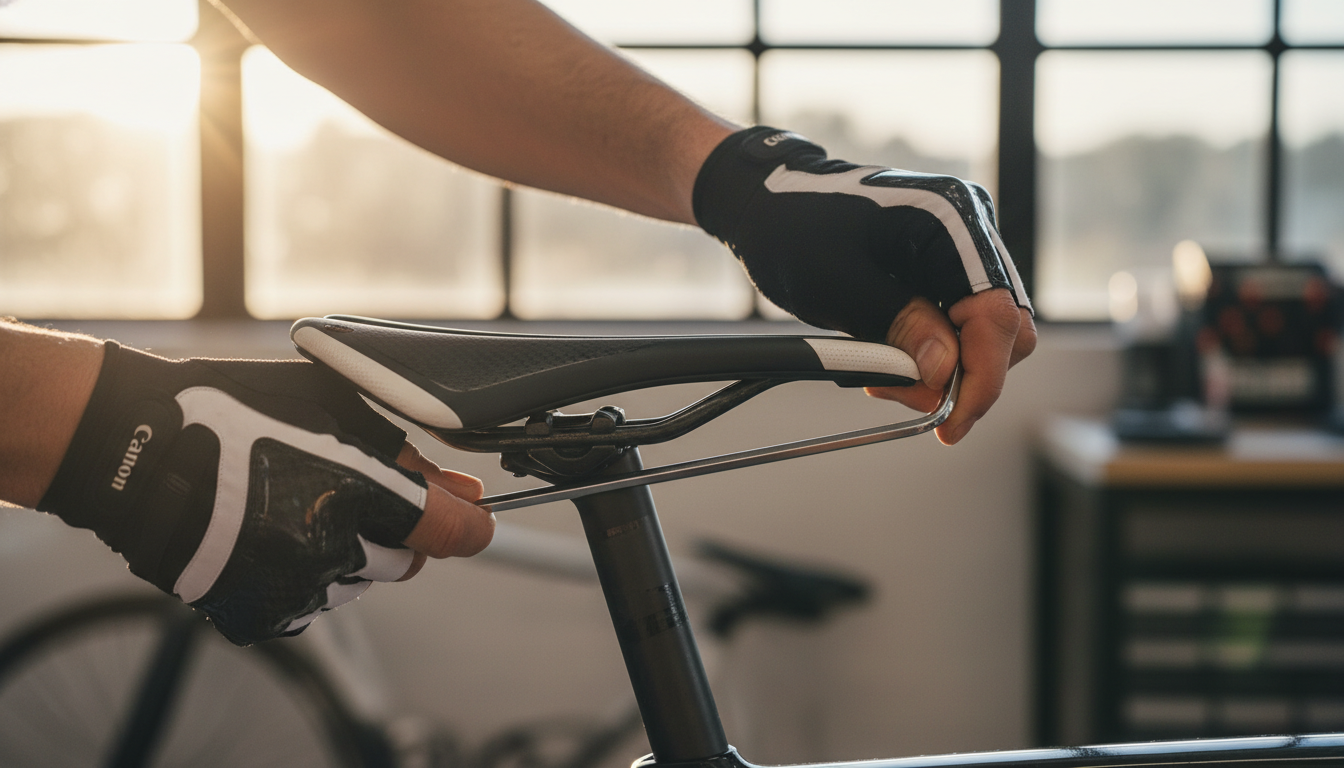
Installation also matters. Saddle height, tilt, and fore-aft position all influence where pressure is concentrated.
- Determine an approximate sit-bone width before choosing your saddle size.
- Adjust saddle height so your knees are not excessively bent or overextended.
- Fine-tune the fore-aft position according to your bicycle fit.
- Make small tilt adjustments rather than making dramatic changes at once.
- Follow the saddle manufacturer’s setup instructions, particularly for split or shortened-nose designs.
Do Not Ignore Long-Term Comfort
Comfort during a five-minute test does not always predict how a saddle will feel after a long ride.
Padding needs to retain enough structure to support the rider instead of compressing completely against the saddle base.
Ventilation also becomes increasingly important during longer sessions. Central channels and open cutouts can improve airflow and reduce the amount of material in sensitive contact areas.
- Prioritize supportive, resilient foam rather than judging the saddle only by initial softness.
- Look for a central cutout, relief channel, or ventilation slot when pressure and heat buildup are concerns.
- Consider water-resistant materials if the bicycle is frequently used outdoors.
- Give a significantly different saddle shape a reasonable adjustment period before deciding whether the fit works for you.
Avoid These Buying Mistakes
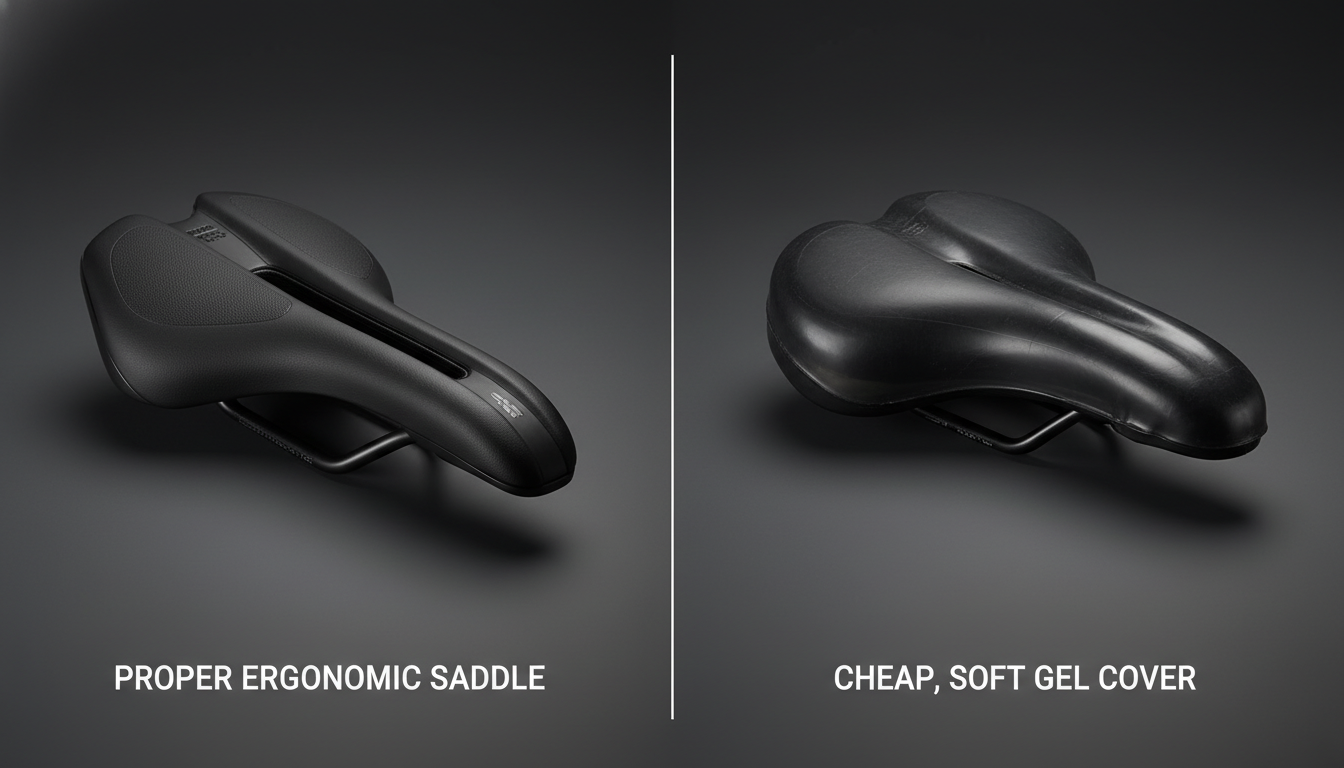
A common mistake is assuming that the thickest and softest saddle must automatically be the most comfortable.
Extremely soft padding can compress considerably once the rider’s full weight is applied, potentially reducing support and creating additional contact around surrounding areas.
Another mistake is selecting a wide comfort saddle for an aggressive riding style. A saddle that works well on a cruiser may interfere with leg movement on a road or mountain bike.
Finally, riders sometimes replace a saddle when the real problem is incorrect height, tilt, or fore-aft adjustment.
- Do not choose a saddle solely because it has the thickest padding.
- Avoid oversized comfort seats for aggressive riding unless the width matches your position.
- Do not ignore saddle width and sit-bone support.
- Check your saddle adjustment before assuming the product itself is the problem.
- Follow manufacturer-specific installation guidance for unusual saddle shapes.
Final Recommendation
Selecting the best saddle to reduce pelvic pressure depends primarily on riding position, preferred support level, and how actively you move on the bike.
For upright cyclists and indoor fitness users, a broad saddle with substantial cushioning and vibration absorption can provide a comfortable platform.
For commuters, adjustable or medium-width ergonomic designs offer a useful balance between support and pedaling clearance.
Performance-oriented trail riders generally need a narrower saddle that reduces central pressure without restricting body movement.
| Buyer Type | Recommended Product | Reason |
|---|---|---|
| Best Overall Comfort | ROCKBROS Bike Seat Cushion with Dual Shock Absorbing Ball | Combines high-density memory foam, dual shock absorption, broad support, and a universal mounting design for indoor and casual outdoor riding. |
| Best Width Adjustability | HUGEOAKS Width Adjustable Bike Seat | Provides three width settings that allow riders to fine-tune rear support according to their preferred fit. |
| Best Vibration Dampening | Cloud-9 Cruiser Select Comfort Saddle | Uses a broad cruiser profile, multi-stage foam, and elastomer suspension to reduce repeated road vibration. |
| Best Ergonomic Value | VELMIA Bicycle Saddle with 3 Zone Concept | Balances memory foam, ventilation, waterproof construction, and a medium-width ergonomic shape. |
| Best High-Performance | ISM PM 2.0 Mountain Bike Seat | Combines a shortened pressure-relief design, narrow performance profile, and chromoly rails for active trail riding. |
Common Asked Questions about the Best Saddles to Reduce Pelvic Press
How do saddles designed to reduce pelvic pressure work?
Pressure-relieving saddles generally work by changing where the rider’s weight is supported.
Instead of concentrating contact through the middle of the saddle, an ergonomic design aims to provide more stable support beneath the sit bones while reducing unnecessary material beneath sensitive areas.
Different manufacturers achieve this through central cutouts, recessed channels, split profiles, shorter noses, or noseless-style designs.
Correct width and positioning remain important because even an advanced relief channel will not compensate for a saddle that is significantly mismatched to the rider.
Why can a firmer saddle feel more comfortable than an extremely soft one?
Softness and long-term support are not the same thing.
Very soft foam may feel comfortable when first pressed by hand, but it can compress substantially once the rider’s full weight is applied.
A firmer high-density memory foam or performance foam can maintain its structure more effectively and keep the rider supported over the intended contact areas.
The ideal firmness still varies by riding position, body dimensions, and personal preference.
What is the purpose of a noseless bicycle saddle design?
Traditional bicycle saddles use a long front nose partly to provide stability and control.
A shortened or noseless-style saddle removes much of this front section, reducing the amount of material directly beneath the rider when leaning forward.
This geometry can be particularly useful for cyclists using aggressive road, mountain-bike, or climbing positions.
Because the support points feel different from those on a conventional saddle, careful setup and an adjustment period may be necessary.
How long does it take to adjust to a new ergonomic saddle?
Adjustment time varies from rider to rider.
A saddle with a substantially different width, firmness, or pressure-relief design can change which areas support the rider’s weight.
Rather than judging the saddle after only a few minutes, riders may benefit from starting with shorter rides and making small setup adjustments before increasing ride duration.
Persistent numbness, significant pain, or other concerning symptoms should not simply be ignored as part of an adjustment period.
Can these comfort saddles be installed on any type of bicycle?
Many modern saddles use standard dual rails that work with common bicycle seat-post clamps.
Several comfort models also include adapters for other mounting arrangements.
Compatibility is not universal, however, so check the rail dimensions, seat-post clamp design, and any manufacturer-specific mounting requirements before purchasing.
The products in this guide cover a range of uses including cruisers, electric bicycles, trekking bikes, mountain bikes, road-oriented setups, and indoor exercise bicycles.
Does a wider saddle always reduce pelvic pressure?
No. A wider saddle can be useful when it correctly supports a rider’s sit bones, especially in an upright riding position.
However, a saddle that is excessively wide can interfere with thigh movement and increase rubbing during active pedaling.
The goal is not to choose the widest possible saddle, but to choose a width and shape that match your anatomy and riding posture.
Which saddle is best for indoor exercise bikes?
For an indoor exercise bike with a relatively upright riding position, the ROCKBROS Bike Seat Cushion with Dual Shock Absorbing Ball is the strongest comfort-focused option in this comparison.
Its broad rear platform, high-density memory foam, and multi-zone pressure-relief design make it better suited to stationary and recreational riding than a narrow performance saddle.