
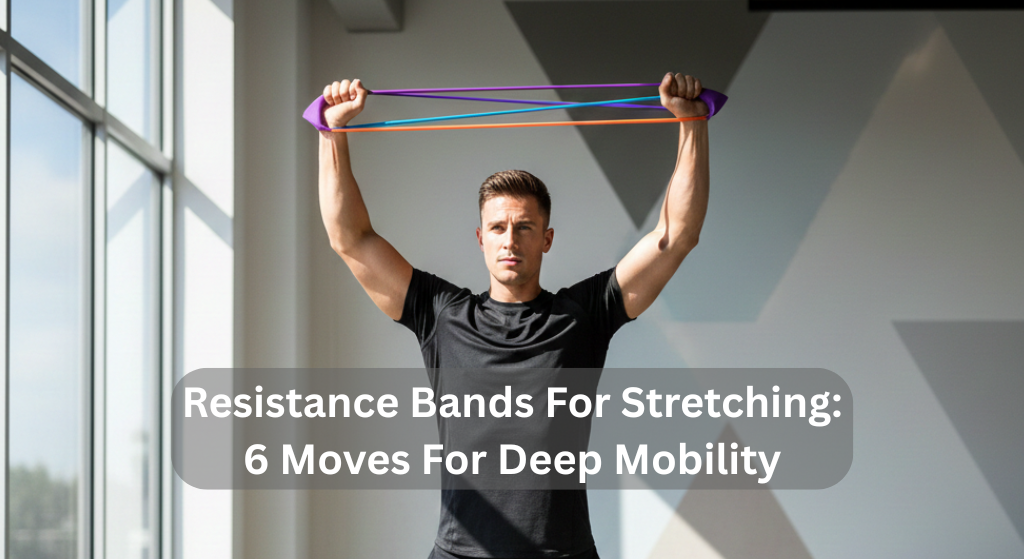
Most people stretch the same way they always have. Sit, pull, hold, hope for the best. It feels productive, but the results rarely stick.
Resistance bands for stretching change how your body responds. Instead of triggering the stretch reflex that makes muscles tighten up, bands help muscles relax so you can move deeper with less strain. This leads to faster gains, less joint stress, and mobility that actually lasts beyond the session.
In this guide, you will learn the science behind banded stretching, how to choose the right bands, and six proven upper and lower body techniques you can use right away.
Resistance Bands For Stretching: 6 Moves
Static stretching often looks calm, but your nervous system does not see it that way. When you pull a muscle and hold it, the body senses danger and tightens to protect itself.
This response limits how far you can go and how much flexibility you keep. You may feel looser for a few minutes, then stiff again later.
Resistance bands help bypass this defense by keeping you active during the stretch, not passive.
How Bands Change Muscle Physiology
Resistance bands for stretching work because they speak the same language as your nervous system. Two key mechanisms make them effective.
- Autogenic inhibition happens when you gently contract a muscle against band tension. That contraction tells the muscle it is safe to relax, allowing you to stretch deeper once you release.
- Joint traction instead of compression is the second benefit. Bands pull the joint surfaces slightly apart, creating space. This reduces pinching and irritation, especially in shoulders, hips, and knees where compression often causes pain.
Choosing the Right Bands for Mobility Work
Using the correct band makes stretching safer and more effective. Most people need only a few options to cover the whole body.
Power or super loop bands are the most versatile choice. Their length allows full body stretching and assisted positions.
- Red or light tension bands work best for shoulders, arms, and smaller muscle groups
- Black or purple medium tension bands are ideal for hamstrings, hips, and lower body work
Flat therapy bands are useful for rehab exercises and gentle rotator cuff stretching.
Mini loop bands are mainly for activation but can help with ankle and foot mobility when used lightly.
The Big Upper Body Release Protocol
This section is ideal for desk workers and anyone who trains overhead. Each movement starts gently and builds range without forcing it.
Shoulder Passthroughs
This stretch opens the front of the shoulders and chest, areas that tighten quickly from sitting.
Keep your elbows locked and grip the band wide. Move the band overhead and behind you in a slow arc. At the top, lightly shrug your shoulders to clear the joint space before returning forward.
Overhead Lat Distraction
This movement decompresses the spine while stretching the lats and upper back.
Anchor the band above head height. Hold it with one hand, hinge your hips back, and let the band pull your arm forward. Keep your ribs down and breathe slowly as the stretch deepens.
Anchored Chest Opener
This stretch targets the deep chest muscles that pull the shoulders forward.
Anchor the band at mid height. Step away, hold the band with one arm, and rotate your torso away from the anchor. Stop before discomfort and let the band do the work.
The Deep Lower Body Release Protocol

These stretches work well for runners, lifters, and anyone dealing with hip or leg tightness. Move slowly and stay relaxed.
Supine Hamstring PNF Stretch
This technique improves flexibility faster than passive stretching alone.
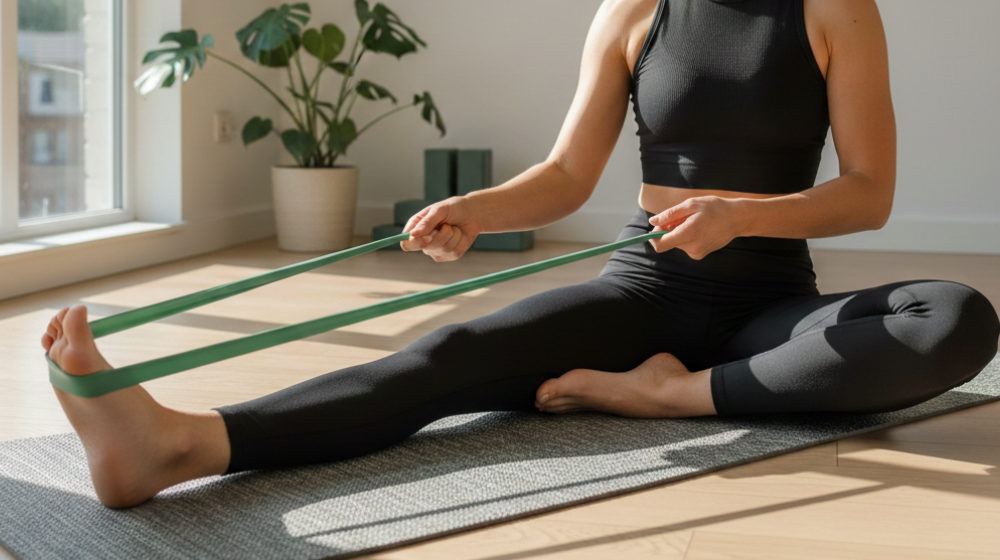
Loop the band around your foot and lie on your back. Pull the leg toward your face until you feel tension. Push your heel gently into the band for five seconds, then relax and pull slightly deeper for ten seconds. Repeat three times.
Banded Couch Stretch
This variation opens the hip flexors without jamming the lower back.
Anchor the band low and loop it high into the crease of your hip. Kneel into a couch stretch position and let the band pull your thigh forward as you lean back slightly. Keep your core tight and breathe.
Lying Groin Opener
This stretch targets the inner thighs and improves hip range.
Lie on your back and loop the band around one foot. Let the leg fall out to the side while the band adds gentle tension. Stay relaxed and avoid forcing the range.
Common Mistakes That Slow Progress
Small errors can undo the benefits of banded stretching. These are the most common ones to avoid.
- Using too much tension causes the body to fight back. The band should assist the stretch, not overpower it.
- Poor anchoring is a safety risk. Always secure bands to fixed objects like racks or heavy posts, never loose furniture.
- Holding your breath keeps the nervous system on high alert. Slow exhaling helps muscles relax and improves range faster.
Conclusion
Resistance bands for stretching turn flexibility work into an active mobility practice instead of a passive wait. By using controlled tension and joint-friendly traction, you gain range that feels stronger and lasts longer. If you want to upgrade your routine, start with quality bands you can trust, book a movement assessment to find your personal limits, or download our free 10-minute daily mobility guide to stay consistent.