
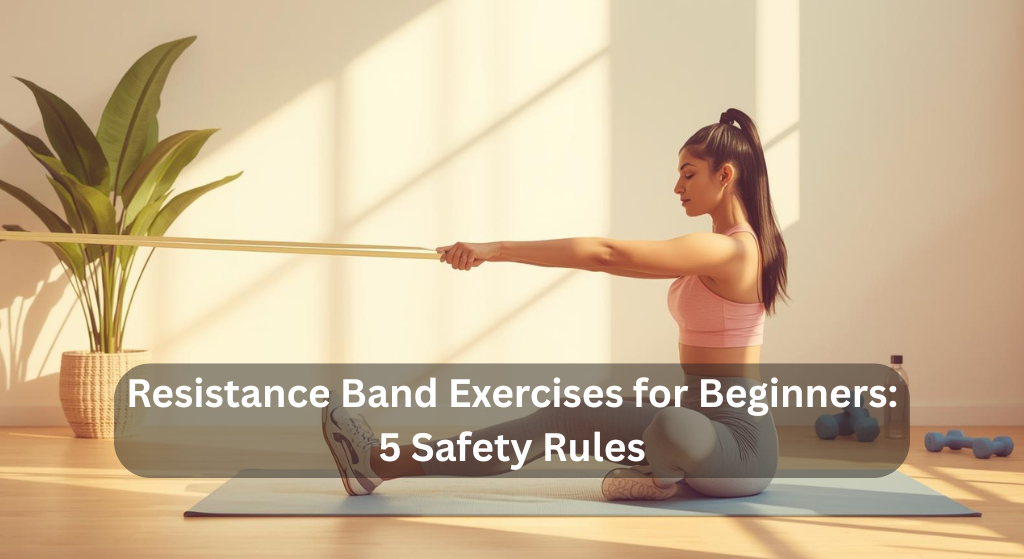
Starting strength training can feel overwhelming when you are not sure what equipment is safe or where to begin. Resistance bands simplify the process and remove much of the fear around lifting.
Resistance band exercises for beginners are an effective way to build strength, improve balance, and learn proper movement without heavy weights. Bands provide steady tension, support joint-friendly training, and allow you to stay in control from the first rep to the last. When used correctly, they work well for full-body workouts at home or while traveling.
This guide explains how to choose bands, use them safely, learn beginner movements, and follow a simple full-body workout.
Resistance band exercises for beginners: 5 safety rules
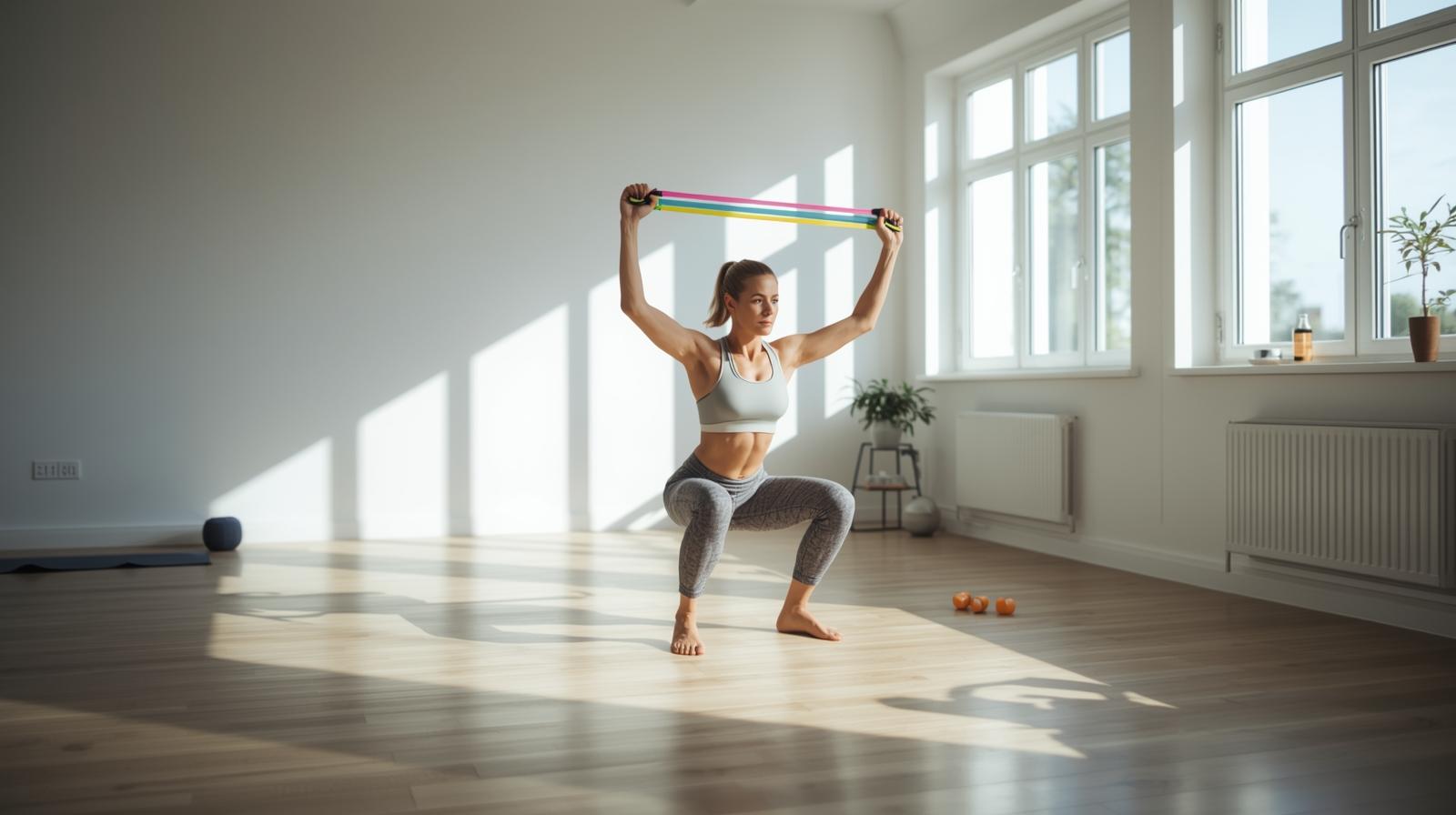
Resistance bands work by creating tension as they stretch. For beginners, the focus should always be smooth movement and control rather than speed or force.
Basic safety and setup rules
- Inspect bands before every workout for cracks, thinning, or worn areas
- Replace damaged bands immediately
- Use only stable anchor points such as a solid door hinge or fixed post
- Avoid sharp edges and unstable attachments
- Begin each rep with the band slightly taut, not loose
- Move slowly and avoid jerking the band
These habits reduce injury risk and help you build confidence early.
Band types to use as a beginner
You only need a small amount of equipment to train effectively with bands.
Best beginner band options
- Mini loop band for lower body exercises like squats, bridges, and lateral steps
- Long loop or tube band for rows, presses, and chest-focused movements
These bands are easy to control and cover most beginner strength exercises.
Choosing the right resistance level
Using the correct resistance is more important than using strong resistance. Beginners progress faster when form stays consistent.
Simple resistance guideline
- Choose a band that allows full control through every rep
- Tension should be challenging but manageable
- Increase resistance only when all reps feel smooth and pain-free
If posture or balance starts to fail, the band is too strong.
Pre-session safety checks
A short check before training helps prevent problems during your workout.
What to check before starting
- Band surface for damage or weak spots
- Anchor point stability if using a door or post
- Enough open space to move safely
- Footwear or barefoot setup that feels stable
This takes less than a minute and protects both you and your equipment.
Beginner exercise library by movement pattern
Learning exercises by movement pattern makes workouts easier to understand and repeat.
Squat pattern
Squats strengthen the legs and glutes while improving knee control.
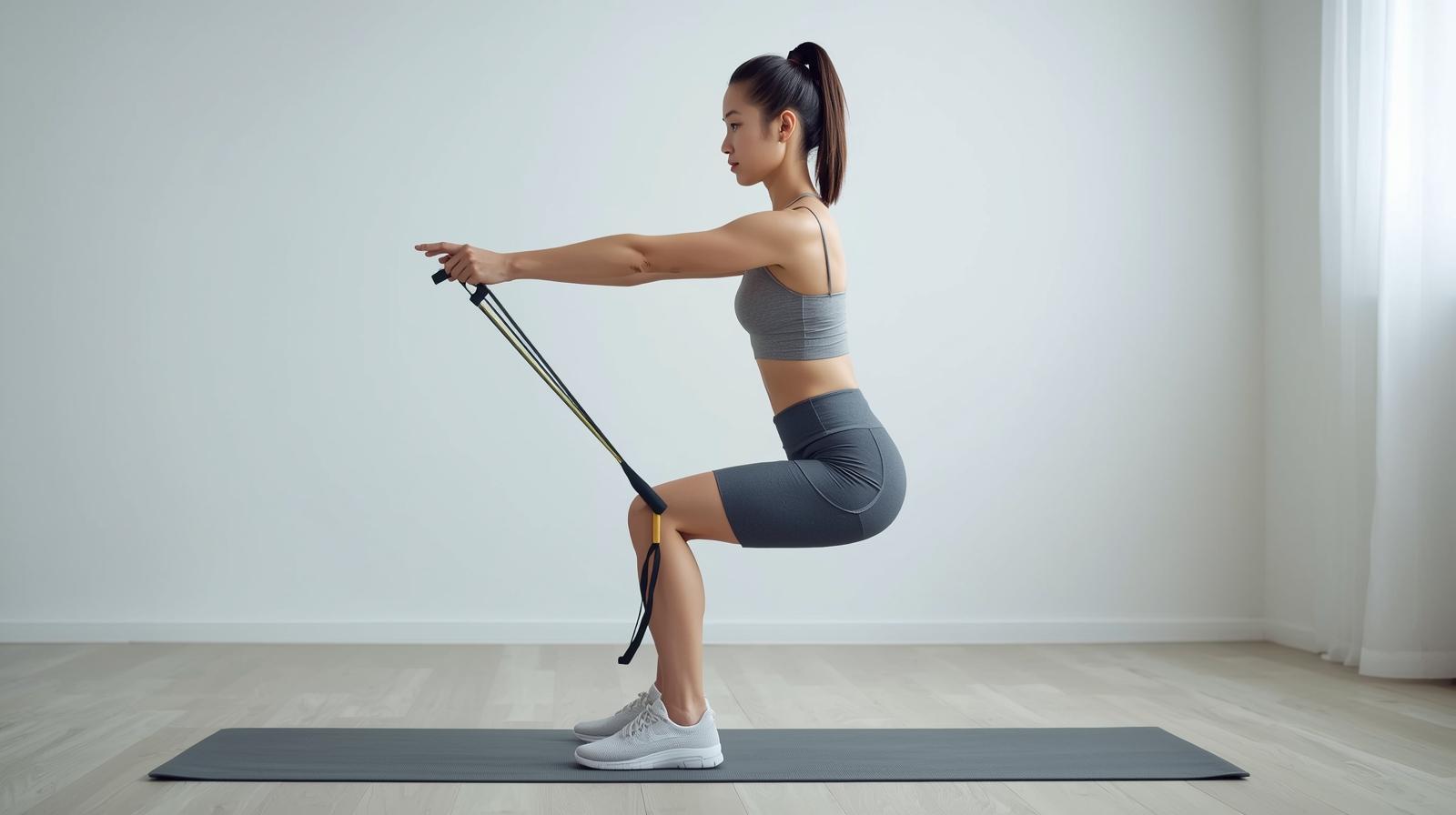
Banded squat
- Place a mini band above the knees or a long band under the feet
- Sit back into the hips and press the knees slightly outward as you stand
Hinge and glute pattern
These movements train the back side of the body.
Glute bridge
- Place a mini band above the knees
- Drive hips upward while keeping the core tight and ribs down
Pull pattern
Pulling builds back strength and arm control.
Seated row
- Sit upright with the band looped around the feet
- Pull your elbows back and squeeze the shoulder blades together
Push pattern
Pushing movements target the chest and shoulders.
Standing chest fly or band press
- Anchor the band behind you
- Press or bring arms forward slowly with control
Core and anti rotation
These exercises build core stability rather than speed.
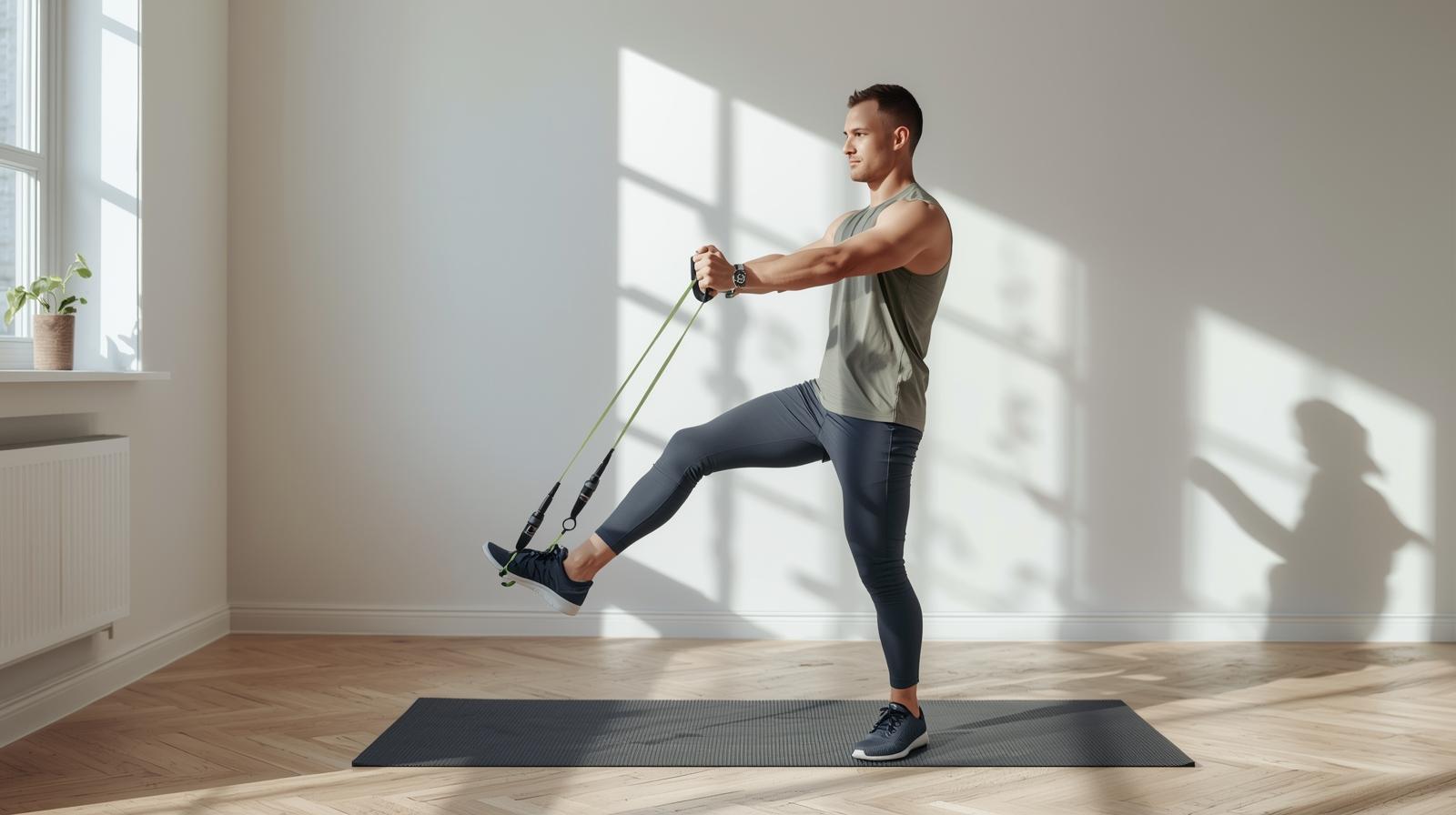
Standing single leg band rotation
- Hold the band at chest height
- Rotate slowly while keeping hips stable
Hip stability
Hip stability supports balance and knee health.
Lateral steps
- Place a mini band around ankles or knees
- Step sideways while staying tall and controlled
Beginner full body workout you can use today
This circuit trains the whole body and gently raises your heart rate.
How to structure the workout
- Perform each exercise in order
- Rest briefly between movements if needed
- Complete three total rounds
- Add more rest between rounds if fatigue increases
Example full body circuit
- Mountain climbers
- Standing single leg band rotation
- Kneeling reverse fly with band
- Walking abduction with mini band
- Push ups or incline push ups
Sets reps and rest for beginners
Beginners benefit most from moderate reps and short rest periods.
General guidelines
- Perform 8 to 15 reps per exercise
- Complete 2 to 3 sets
- Rest 15 to 60 seconds based on fatigue
- Increase resistance only when every rep stays controlled
Progress comes from consistency, not rushing resistance.
Start here and build your plan
A simple setup keeps training easy to maintain.
Beginner essentials
- One mini loop band
- One long loop or tube band
- Optional door anchor for upper body exercises
Next steps
- Practice band tension and setup before workouts
- Use a 15 minute circuit on busy days
- Choose a 20 minute full body circuit when time allows
- Review exercise form regularly as strength improves
Conclusion
Resistance band exercises for beginners provide a safe and effective way to build strength without complicated equipment. With proper setup, smart resistance choices, and simple progression, you can train confidently and build a strong foundation that lasts.