
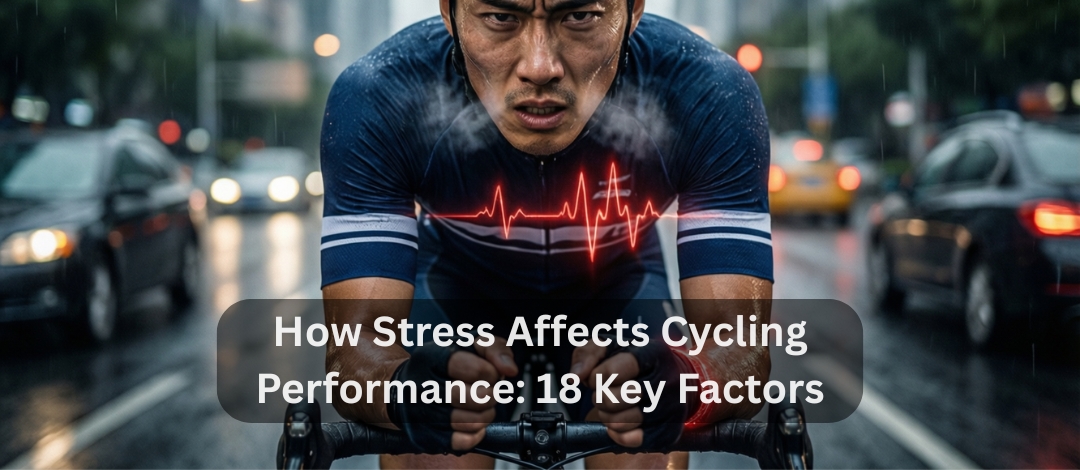
Cyclists often blame bad rides on poor sleep, nutrition, or missed training. Yet many strong riders still feel heavy, unfocused, or unusually fatigued even when everything looks right on paper. That frustration usually has a quieter cause.
Stress changes how the body and brain respond to effort. It raises heart rate, tightens muscles, drains energy faster, and makes the same workload feel harder than it should. Over time, this leads to inconsistent power, slower recovery, and rides that never quite match your fitness.
This article explains how stress influences cycling performance, from physical responses to mental focus, training quality, race execution, and long-term progress.
How Stress Affects Cycling Performance: 18 Key Factors

Stress in cycling goes beyond feeling nervous before a ride. It includes both mental and physical reactions that affect performance and recovery.
Psychological stress refers to internal pressure that builds from expectations, anxiety, work demands, or overthinking training and results. This mental load competes for focus and drains emotional energy that cyclists rely on for consistency.
Physiological stress happens when the body activates its hormonal and nervous systems. This response prepares the body for short-term challenges but becomes harmful when it stays switched on for too long.
Physiological Effects of Stress on Cycling Performance
Stress directly alters how the body functions during training and racing. These changes often happen quietly and build over time.
Hormonal Response
When stress levels rise, hormone balance shifts in ways that limit performance and recovery.
- Increased cortisol levels, which promote muscle breakdown
- Reduced testosterone and growth hormone, slowing repair and adaptation
This hormonal environment makes it harder to get stronger, even with good training.
Cardiovascular Impact
Stress changes how the heart responds to effort.
- Elevated heart rate at submaximal workloads, making easy rides feel harder
- Reduced heart rate variability, a sign of poor recovery and nervous system strain
Cyclists may notice their heart rate stays high even on familiar routes.
Muscle Function
Muscles react quickly to stress signals.
- Increased muscle tension, reducing smooth pedaling
- Impaired muscle recovery and repair, leading to lingering soreness
Tight, tired muscles limit power transfer and increase fatigue.
Energy Metabolism
Stress affects how efficiently the body uses fuel.
- Faster glycogen depletion, causing early fatigue
- Reduced efficiency of oxygen utilization, lowering endurance
Riders may feel drained sooner despite proper fueling.
Neuromuscular and Motor Control Effects
Stress disrupts communication between the brain and muscles, which is essential for efficient cycling.
- Decreased coordination and pedaling efficiency, especially at higher intensities
- Increased likelihood of premature muscle fatigue, even during steady efforts
- Reduced power output consistency, making pacing harder to maintain
These effects often show up as uneven power data or difficulty holding a steady cadence.
Cognitive and Psychological Effects
Mental stress plays a major role in how hard cycling feels and how well decisions are made.
Focus and Decision-Making
Stress narrows attention and slows thinking.
- Impaired concentration during training or racing
- Slower reaction times, especially in fast or technical situations
This can impact safety as well as performance.
Perceived Effort
Stress changes how effort is interpreted by the brain.
- Higher rate of perceived exertion at the same workload
- Reduced pain tolerance, making discomfort feel overwhelming
Rides feel harder even when power numbers stay the same.
Motivation
Long-term stress erodes mental drive.
- Lower intrinsic motivation to train or push limits
- Increased mental fatigue, leading to skipped sessions
Motivation loss often appears before physical burnout.
Impact on Training Quality
Stress lowers the effectiveness of training even when volume stays high.
- Reduced ability to hit target power or intensity zones
- Decreased training adaptation, slowing fitness gains
- Higher risk of overtraining syndrome, especially with poor recovery
Progress stalls because the body cannot absorb the work being done.
Impact on Competitive Performance
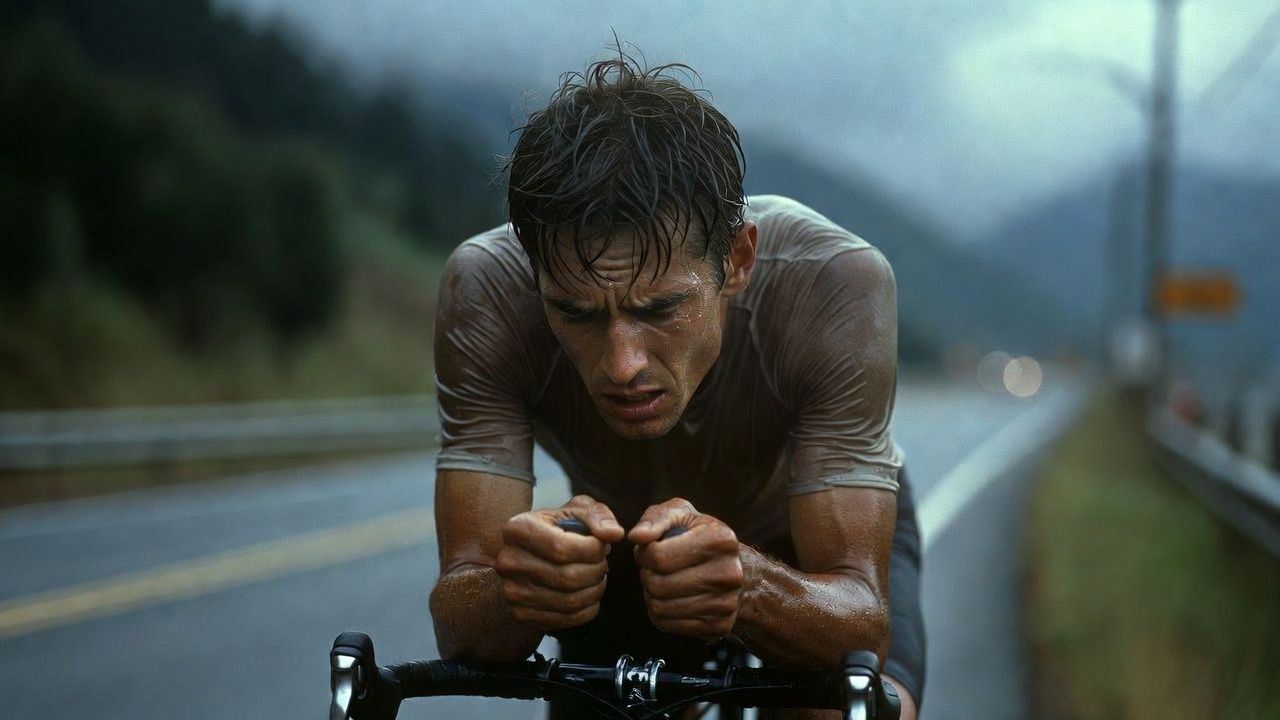
Race day magnifies the effects of stress.
- Poor pacing strategy, leading to early fatigue
- Increased likelihood of tactical errors under pressure
- Reduced ability to respond to attacks or surges
Stress limits both physical response and mental clarity during competition.
Injury and Illness Risk
Chronic stress weakens protective systems in the body.
- Weakened immune function, increasing illness risk
- Increased susceptibility to overuse injuries, due to poor tissue repair
- Slower recovery between sessions, compounding fatigue
Small issues become long-term setbacks.
Long-Term Performance Consequences
When stress remains unmanaged, the effects compound.
- Chronic performance decline, despite continued training
- Burnout, marked by emotional and physical exhaustion
- Plateau or regression in aerobic capacity and power output
Without intervention, long-term progress becomes difficult to regain.
Conclusion
Understanding how stress affects cycling performance helps explain why hard work does not always equal better results. Stress alters hormones, heart function, muscle recovery, focus, and motivation, quietly limiting both training and racing outcomes. Managing stress is not a luxury for cyclists. It is a key part of riding stronger, staying healthy, and enjoying long-term progress.