
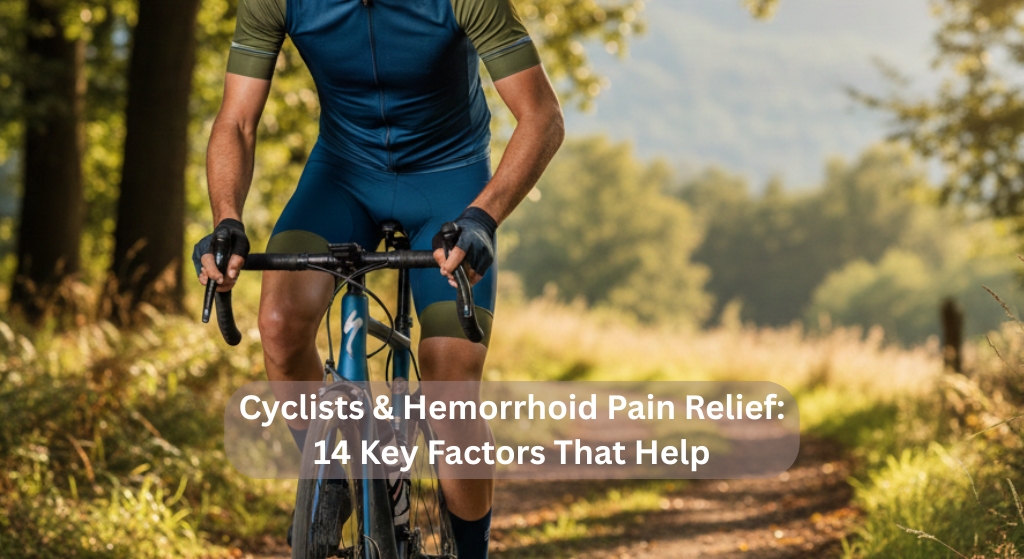
Hemorrhoid pain can turn a good ride into a miserable one, and many cyclists deal with it more often than they admit. The mix of pressure, heat and long hours in the saddle can make a sensitive issue feel even worse. It’s frustrating, painful and sometimes embarrassing, but it’s also very common.
Cyclists experience hemorrhoids because the perineal area takes on repeated pressure and friction. That pressure slows blood flow around the rectal veins, which can lead to swelling and irritation.
Long rides, dehydration, heat and tight gear can make the problem flare more often. Relief comes from easing pressure, improving habits and treating symptoms early.
This guide explains why cyclists face this issue, how to ease the pain, and what steps help prevent it from coming back.
Cyclists & Hemorrhoid Pain Relief: 14 Key Factors That Help

Cyclists spend long periods seated, which puts steady pressure on the perineal region. This can irritate veins and soft tissue. It also traps heat and moisture, which makes the skin more fragile. When the tissue becomes stressed, hemorrhoids can worsen or appear for the first time.
How long periods of sitting and pressure affect the area
Extended time on the saddle limits blood flow and increases friction. When the tissue becomes inflamed, even short rides can feel uncomfortable. Small changes in position or gear can help reduce this stress.
Common Causes of Hemorrhoid Pain for Cyclists
Many cyclists deal with flare-ups from a mix of physical pressure and lifestyle habits. Knowing the common triggers makes it easier to manage them.
- Continuous pressure on the perineal area
- Friction from long rides
- Heat and moisture build-up
- Straining from dehydration or poor bathroom habits
Recognising Symptoms
Most symptoms show up during or after a ride, and they often get worse if ignored. These signs can help you spot a flare early.
- Pain or soreness during or after cycling
- Swelling or irritation
- Itching or burning sensations
- Discomfort when sitting
Immediate Pain Relief Options
Early relief keeps a minor problem from becoming a week-long setback. These options are simple and often bring quick comfort.
- Over-the-counter creams and ointments can ease swelling and itching
- Cold compresses after rides help reduce pain
- Soothing warm baths relax the area
- Reducing ride time temporarily gives irritated tissue a chance to heal
Bike & Gear Adjustments That Reduce Pain
Small adjustments to your setup can make a big difference. A supportive fit reduces pressure and friction.
- Choosing the right saddle with the proper shape, padding or a cut-out can ease pressure
- Correct saddle height and angle prevent unnecessary strain
- Wearing proper cycling shorts with padding helps reduce irritation
- Keeping gear clean and dry protects the skin
Lifestyle Changes for Prevention
Habits off the bike matter just as much as what happens on it. These changes help keep hemorrhoids from flaring.
- Hydration to prevent constipation keeps stools softer
- High-fibre diet supports easier bowel movements
- Taking breaks during long rides gives the tissue time to recover
- Stretching and changing positions on the bike reduce stress on the area
When to Stop Riding Temporarily

Sometimes rest is the most effective treatment. Knowing when to pause can prevent a small issue from becoming severe.
- Pain that interferes with daily activities
- Worsening swelling
- Inability to sit comfortably
- Signs that the area needs rest before riding again
When to Seek Medical Advice
Professional support is important when symptoms don’t improve. Getting help early protects your long-term comfort.
- Persistent or severe pain
- Bleeding that continues
- Symptoms not improving with home care
- Possible need for professional treatments
Professional Treatment Options for Cyclists
If home care isn’t enough, medical treatments can offer fast relief and help prevent future flare-ups. Minimally invasive approaches or in-clinic procedures can shrink hemorrhoids and reduce swelling. Many cyclists return to riding comfortably once the tissue heals and pressure is managed better.
Long-Term Prevention Tips for Cyclists
Long-term comfort comes from a mix of good gear, smart habits and consistent care.
- Saddle selection and cycling posture that reduce pressure
- Ongoing skin care and hygiene to protect sensitive areas
- Balanced training schedule that avoids long stretches of sitting
- Healthy bowel habits to limit straining
Conclusion
Hemorrhoid pain can take the joy out of cycling, but most riders can manage it with simple changes in gear, habits and care. Listening to your body, easing pressure and responding early to symptoms can keep you riding more comfortably and with fewer setbacks.