
Long rides can leave even the strongest cyclists feeling stiff, sore, and tight. Hours of repetitive pedaling put serious stress on your muscles, especially in the hips and legs. Without proper recovery, that tension can build up and affect both comfort and performance.
Foam rolling is a simple self-massage technique that helps release tight muscles, improve blood flow, and support faster recovery. By applying controlled pressure to specific areas, you can reduce soreness, move more freely, and keep your body balanced on the bike. It also supports good posture, which is important for efficient riding and long-term joint health.
In this guide, you will learn why foam rolling matters, which muscles deserve the most attention, when to do it, and how to get the best results safely.
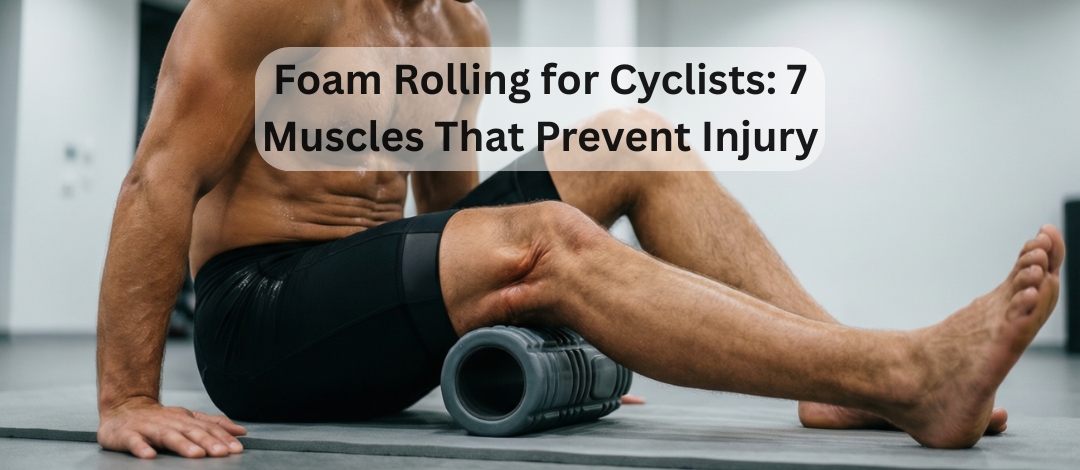
Foam Rolling for Cyclists: 7 Muscles That Prevent Injury

Cycling is smooth and repetitive, which is great for endurance but tough on muscle balance. Over time, certain muscles become overworked while others tighten from staying in the same position.
Regular foam rolling helps your body reset after rides and prepares it for the next one by:
- Reducing muscle tightness caused by constant pedaling
- Improving hip and lower-body mobility for smoother movement
- Enhancing circulation to deliver nutrients where they are needed
- Lowering injury risk linked to overuse
- Supporting efficient riding posture so you waste less energy
Think of it as routine maintenance for your body, much like cleaning and tuning your bike.
Key Muscle Groups Cyclists Should Target
Targeting the right muscles makes foam rolling far more effective. Focus on areas that handle the most load during rides.
Quadriceps
Your quadriceps generate much of the power that drives each pedal stroke, so they tend to tighten quickly.
- Why it matters: Primary power generators during pedaling
- Rolling focus: Mid-thigh to just above the knee
- Tip: Roll slowly and pause on tender spots to allow the muscle to release
Hamstrings
These muscles help pull the pedal upward and keep your knees stable.
- Why it matters: Assists in the upstroke and stabilizes knees
- Rolling focus: Back of the thigh from glutes to knee
- Tip: Avoid locking the knee to prevent unnecessary strain
Glutes
Strong, relaxed glutes improve power transfer and keep your hips steady on long rides.
- Why it matters: Hip stability and power transfer
- Rolling focus: Sit on the roller and cross one ankle over the opposite knee
- Tip: Lean slightly toward the working side for deeper pressure
Hip Flexors
Cyclists spend hours bent forward, which often shortens these muscles.
- Why it matters: Tight hip flexors limit range of motion
- Rolling focus: Upper front thigh near the hip
- Tip: Use controlled pressure instead of forcing the movement
IT Band (Iliotibial Band)
The IT band is commonly linked to outer knee discomfort in cyclists.
- Why it matters: Often associated with lateral knee pain
- Rolling focus: Outer thigh from hip to above the knee
- Tip: Roll gently and avoid excessive pressure since this area can be sensitive
Calves
Your calves guide ankle motion and help maintain a smooth pedal stroke.
- Why it matters: Supports ankle movement and pedaling efficiency
- Rolling focus: From the Achilles area to the back of the knee
- Tip: Rotate your foot inward and outward to change the pressure angle
Lower Back (Indirect Pressure)
Holding an aerodynamic position places steady demand on the lower back.
- Why it matters: Helps sustain riding posture
- Rolling focus: Muscles beside the spine, never directly on it
- Tip: Keep movements controlled and gentle
When Cyclists Should Foam Roll

Timing can make foam rolling even more effective. Adjust the length of your sessions based on your riding schedule.
- Pre-ride: A brief 5–8 minute session increases tissue readiness and promotes smoother movement
- Post-ride: Spend 10–20 minutes to encourage recovery and reduce stiffness
- Rest days: Light rolling maintains mobility and prevents tightness from returning
Consistency matters more than intensity.
Technique Guidelines
Good technique protects your muscles and ensures you get real benefits from each session.
- Roll at a slow pace, about one inch per second
- Maintain steady breathing to help muscles relax
- Stop and hold on tight spots for 20–30 seconds
- Keep your core engaged to control body weight
- Avoid joints and bones to prevent irritation
If something feels sharp instead of mildly uncomfortable, ease off the pressure.
Suggested Sequence for Efficiency
Following a logical order helps your muscles release gradually and keeps your session organized.
Move from large, load-bearing muscles to smaller stabilizers:
- Glutes
- Hip flexors
- Quadriceps
- IT band
- Hamstrings
- Calves
- Lower back
This flow supports balanced mobility across the entire lower body.
Duration Recommendations
You do not need long sessions to see results. Quality matters more than time.
- Spend 30-60 seconds per muscle group
- Aim for a total session of about 10-15 minutes
- Reduce pressure if discomfort goes beyond moderate intensity
Foam rolling should feel productive, not punishing.
Common Mistakes to Avoid
Even experienced riders sometimes misuse a foam roller. Avoid these habits to stay safe and get better outcomes.
- Rolling too fast
- Applying excessive pressure
- Ignoring painful trigger points
- Rolling directly over knees, hips, or the spine
- Holding your breath instead of relaxing
Patience and control always beat force.
Conclusion
Foam rolling is one of the simplest ways cyclists can protect their bodies, recover faster, and ride more comfortably. By focusing on key muscle groups, using proper technique, and staying consistent, you can reduce tightness, improve mobility, and lower your risk of injury. A few mindful minutes off the bike can make every mile feel smoother.