
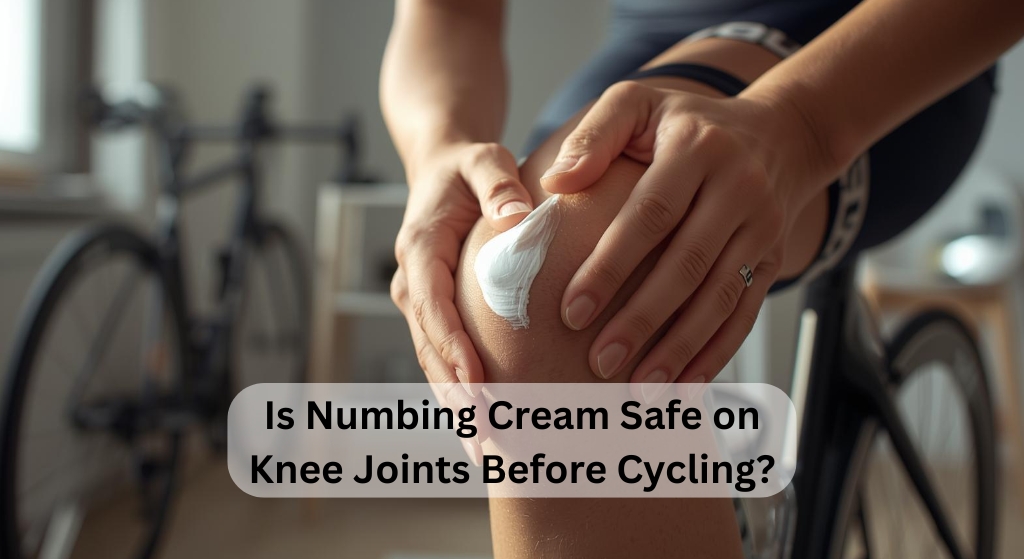
Cycling with a sore knee can make even a short ride feel harder than it should. It’s no surprise that some riders wonder if a quick layer of numbing cream might help them push through the discomfort.
Using numbing cream on the knee before cycling can be safe in small, label-directed amounts on healthy skin. Still, it can also hide early warning signs of injury and may create more risk than relief during a ride. Understanding when it’s appropriate, when it’s not, and what to use instead is the real key to protecting your knee health.
This guide explains how numbing creams work, their safety limits, the risks for cyclists, and the professional options that actually fix knee pain instead of covering it up.
Is Numbing Cream Safe on Knee Joints Before Cycling?
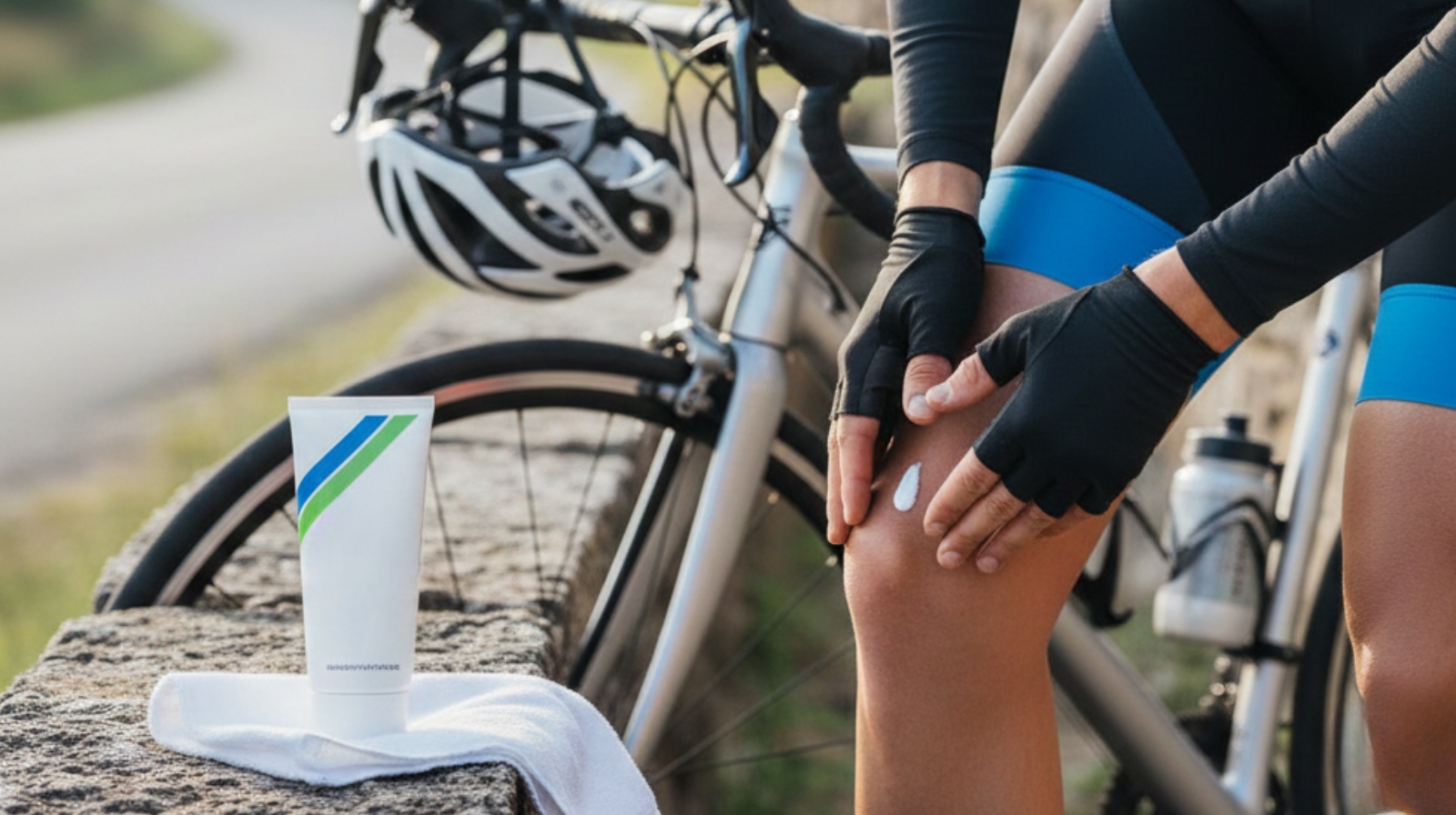
Numbing creams are topical anesthetics. Most contain lidocaine, which temporarily blocks pain signals in the skin and shallow tissues. They can take the edge off mild, surface-level soreness.
They do not fix mechanical problems in the knee, and they cannot solve the common overuse issues that cause cycling pain. They simply dull sensation for a short period.
General Safety of Topical Numbing Creams
Most nonprescription creams are safe when used as directed. Always apply a thin layer to a small area and only on intact skin. Follow the maximum daily dose on the label.
Possible side effects include:
- Redness or irritation
- Mild rash or burning
- Rare systemic symptoms if used in large amounts, on broken skin, or with high-strength products
Using more than recommended does not improve relief. It only raises risk.
Risks When You Use Numbing Cream Before a Ride
Before cycling, numbing your knee can feel helpful, but it may hide the very pain that keeps you from pushing the joint too far. Pain signals are your body’s early alert system. When they’re dulled, you can overload the knee without realising it.
This can increase the chance of:
- Tendinitis flare-ups
- Cartilage irritation
- Ligament strain
- Longer recovery times
Heat and heavy exercise also increase blood flow. With some products, this can raise absorption and safety risks, which is why regulators warn against using strong numbing creams with heat or heavy activity.
Safety Warnings Athletes Should Know
Regulators advise caution with high-concentration lidocaine creams sold for pre-procedure numbing. These should not be used over large areas, under tight coverings, or during intense activity.
Athletes should also avoid:
- Mixing multiple numbing products
- Using prescription-strength creams without medical oversight
- Covering both knees with large amounts of cream before a ride
None of these approaches improves performance and may raise toxicity risk.
When Limited Use May Be Acceptable
There are moments when a small amount of numbing cream is reasonable. It may help if you have mild soreness on the surface of the knee, your skin is healthy, and the treatment area is small. This works best on short, low-intensity rides.
It’s safer as a post-ride comfort tool rather than a pre-ride fix. Even then, it should be paired with rest, reduced load, and guidance from a clinician or pharmacist.
When Numbing Cream Is Not Appropriate Before Cycling
Some signs point to a deeper issue that numbing cream can’t address. Avoid using it if you have:
- Sharp, deep, or persistent knee pain
- Swelling, locking, or instability
- Recent trauma
- Broken or irritated skin
- Large areas of pain on both knees
- A known allergy to anesthetic ingredients
These signs call for proper evaluation, not symptom masking.
Safer First-Line Strategies for Cycling Knee Pain

Before turning to numbing products, focus on the root causes of cycling knee pain. A few adjustments often make a big difference.
Equipment and technique:
- Professional bike fit for saddle height, fore-aft position, cleat alignment, and crank length
- Cadence adjustments to reduce load per pedal stroke
Training and recovery:
- Gradual mileage increases
- Warm-ups and mobility drills
- Rest, ice, compression, elevation when pain spikes
These strategies protect knee structures and support long-term comfort on the bike.
Professional Services That Solve the Real Problem
If knee pain limits your rides, support is available, and it goes far beyond temporary numbing.
- Pain linked to position or distance: A professional bike fit or cycling biomechanics assessment can correct saddle height, cleat setup, and riding posture.
- Ongoing or recurring knee pain:Sports physiotherapy offers diagnosis, rehab exercises, load management, and safe guidance on topical products.
- Complex or long-standing issues: A sports medicine or orthopedic consult can assess joint health, order imaging if needed, and create a full treatment plan.
These services address the cause, not the symptom.
Practical Guidance if You Still Choose to Use Numbing Cream
If a clinician confirms it’s safe for you, use numbing cream with care.
Follow these steps:
- Check product strength so you know whether it’s suitable for exercise
- Apply the smallest amount to the smallest area
- Avoid heat or tight coverings that increase absorption
- Do a patch test to check for irritation
- Monitor the knee closely during and after your ride
If your pain increases or you feel the need to reapply numbing cream often, stop riding and get your knee assessed.
Conclusion
Numbing cream can offer short-term relief for surface soreness, but it should not be your main tool for cycling knee pain. It can hide important warning signs, and it does nothing to fix the real issue. The safest and most effective approach is to address fit, training load, and knee mechanics with support from experienced professionals. This keeps you riding comfortably and protects your joint long term.