
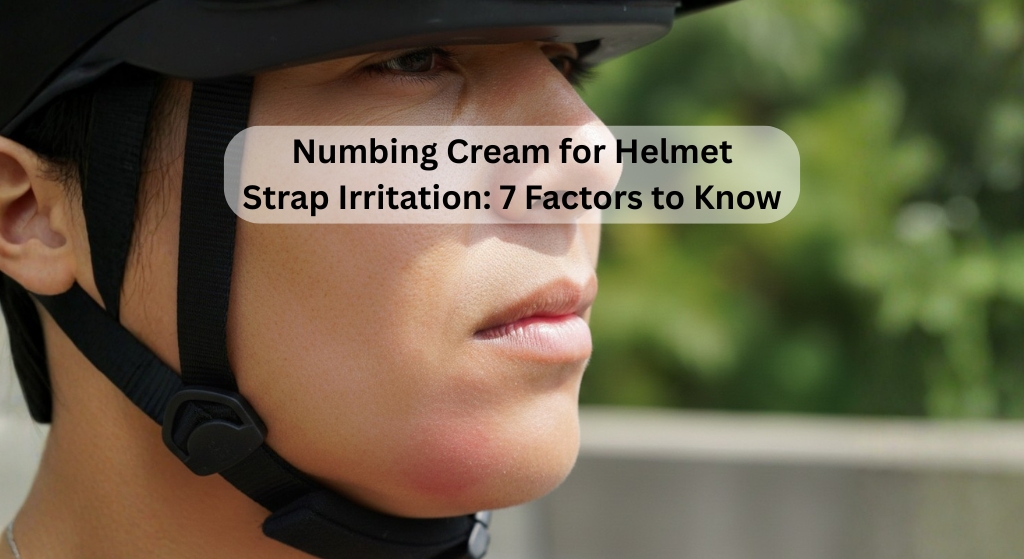
Helmet straps can rub the same spot over and over until the skin feels raw. Anyone who rides or trains often has dealt with that sting under the chin or along the jawline. It is annoying at first, then downright painful once the skin breaks down.
Numbing cream for helmet strap irritation can ease discomfort for a short time, but it does not solve the cause of the rubbing. It helps by dulling sensation, not by healing the irritated skin.
Because these products carry safety limits, most experts recommend them only when pain is already present, and other options are not enough. Prevention and barrier care remain the foundation for real relief.
This guide walks you through what causes strap irritation, when numbing creams might help, the risks to watch for, and better long-term solutions.
Numbing Cream for Helmet Strap Irritation: 7 Factors to Know

Helmet strap irritation comes from repeated friction, pressure, sweat, and heat. Even a well-made strap can rub along the jawline, under the chin, or around the neck until the skin gets red and bumpy.
Some riders also react to the strap material. A rough texture, stiff strap, or poor fit can break down the skin barrier. Once the skin is angry, even mild contact can feel sharp.
Common signs include:
- Redness or warm patches
- Small bumps or rash
- Stinging when sweating
- Tender, raw areas under the strap
Role of numbing creams
Topical anesthetic creams use ingredients like lidocaine to block nerve signals in the skin. This can reduce pain and stinging in irritated spots.
These products are made for short procedures, small injuries, or needle pain. They are not designed to handle ongoing friction from daily helmet use. They simply make the area feel less sensitive for a limited window.
Because they do not stop the rubbing or heat, they are usually not considered a primary solution for strap irritation.
When numbing cream may be considered
There are moments when you still need to wear a helmet even though your skin already hurts. In those cases, a clinician may allow short-term use of numbing cream on intact skin to get through necessary riding or cleaning.
If used this way, the amount, frequency, and area of application should stay within product instructions or medical guidance.
Numbing cream is a backup option, not a daily fix.
Safety limits and risks of numbing creams
Numbing creams come with strict safety rules. Overusing them or applying them over large areas can increase how much the body absorbs. Using them on broken skin raises that risk even more.
Potential problems include:
- Skin irritation or allergic reaction
- Lightheadedness or irregular heartbeat in rare cases
- Increased risk of complications if applied under tight or covered gear
These risks are why medical sources warn against heavy or frequent use without guidance.
Why prevention and barrier products come first
Most sports and skin experts focus on prevention. Reducing friction and moisture does far more for long-term relief than numbing the skin.
Barrier creams and anti-chafe balms help by forming a thin protective film where the strap sits. They allow the skin to glide instead of scrape. Products like petrolatum, balms, and anti-chafe sticks hold up well during long rides and respond to the real cause of irritation.
These options support the skin instead of masking the pain.
Evidence-based non-numbing treatments for strap irritation

Start with gentle steps that calm the skin and protect it before your next ride. These measures help most riders without needing anesthetics.
Helpful approaches include:
- Clean the area after each ride with mild soap
- Moisturize right away to support the skin barrier
- Apply a barrier cream before putting on your helmet
- Add soft or moisture-wicking padding where the strap contacts the skin
- Adjust the helmet fit so the strap sits flat and steady
If a rash has already formed, a short course of hydrocortisone may reduce inflammation. Keep using barrier products while the area heals. Any severe or stubborn case should be checked by a medical professional.
When to direct users to professional services
Some situations need expert evaluation. Skin that stays painful, develops open sores, or reacts strongly to the strap material deserves medical attention. Riders who must wear a helmet daily, such as cyclists, motorcyclists, and workers in protective gear, may also need personalized guidance.
A professional can help with:
- Strap adjustment and fitting
- Identifying material sensitivities
- Recommending liners or alternative helmets
- Prescribing stronger treatments when needed
- Ensuring numbing products are used safely when appropriate
Conclusion
Numbing cream can help when helmet strap irritation becomes painful, but it is only a short-term tool. Real relief comes from preventing friction, protecting the skin, and keeping the strap clean and well-fitted. With a few simple changes and the right products, most riders can stay comfortable and avoid repeated irritation.