
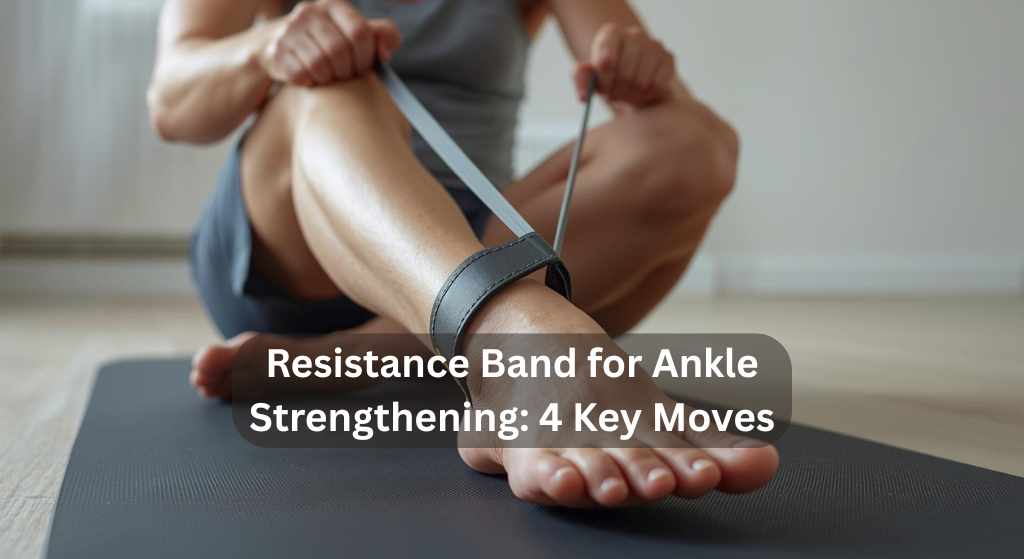
Weak ankles often go unnoticed until something goes wrong. A small roll, lingering stiffness, or lack of balance can affect how you walk, exercise, or stand for long periods.
A resistance band for ankle strengthening helps target the muscles that control ankle movement and stability. By working through four specific motions, you can improve strength, coordination, and support around the joint using a simple, low-impact routine. These exercises are widely used in rehab settings and can also be done at home when movement is comfortable.
This article explains who this routine is for, how to set up correctly, and how to perform each ankle movement with control and confidence.
Resistance Band for Ankle Strengthening: 4 Key Moves
This routine focuses on strengthening the ankle using four band-resisted movements. Each one targets muscles that support ankle control and joint stability.
The goal is to provide a clear, repeatable routine that works well in guided rehab or appropriate home use.
This approach is intended for people who need focused ankle strengthening using elastic resistance. It is best suited for those who can move the ankle gently without sharp pain.
You may benefit if you:
- Need to strengthen muscles that lift, point, or turn the foot
- Can follow controlled repetitions and sets
- Want a simple routine without machines or weights
If any exercise causes pain, stop and consult a qualified professional.
Equipment and setup
Proper setup helps isolate the ankle and prevents unwanted movement from the knee or hip.
You will need:
- A resistance band with comfortable tension
- A stable anchor point, such as a table leg or bed post, is needed when needed
- A seated position that allows the leg to remain still
Keep your leg relaxed and move only at the ankle throughout each exercise.
Ankle plantarflexion with a band
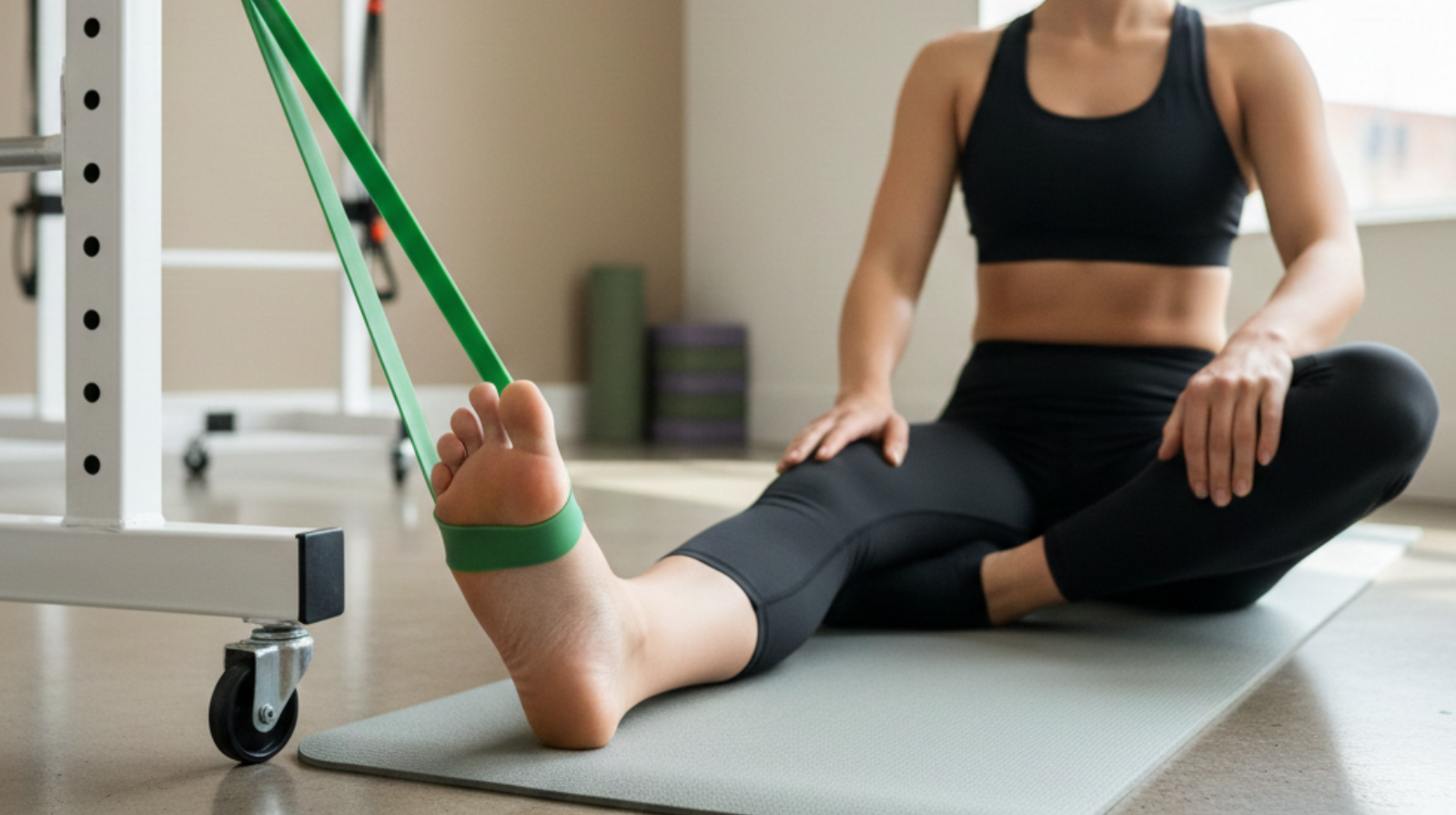
This exercise strengthens the muscles that point the foot downward.
Sit with your legs straight and loop the band around the ball of your foot. Hold the ends of the band in your hands to create resistance.
Focus on:
- Pressing the foot forward like pushing a gas pedal
- Moving slowly through the full range
- Returning to the starting position with control
Ankle dorsiflexion with a band
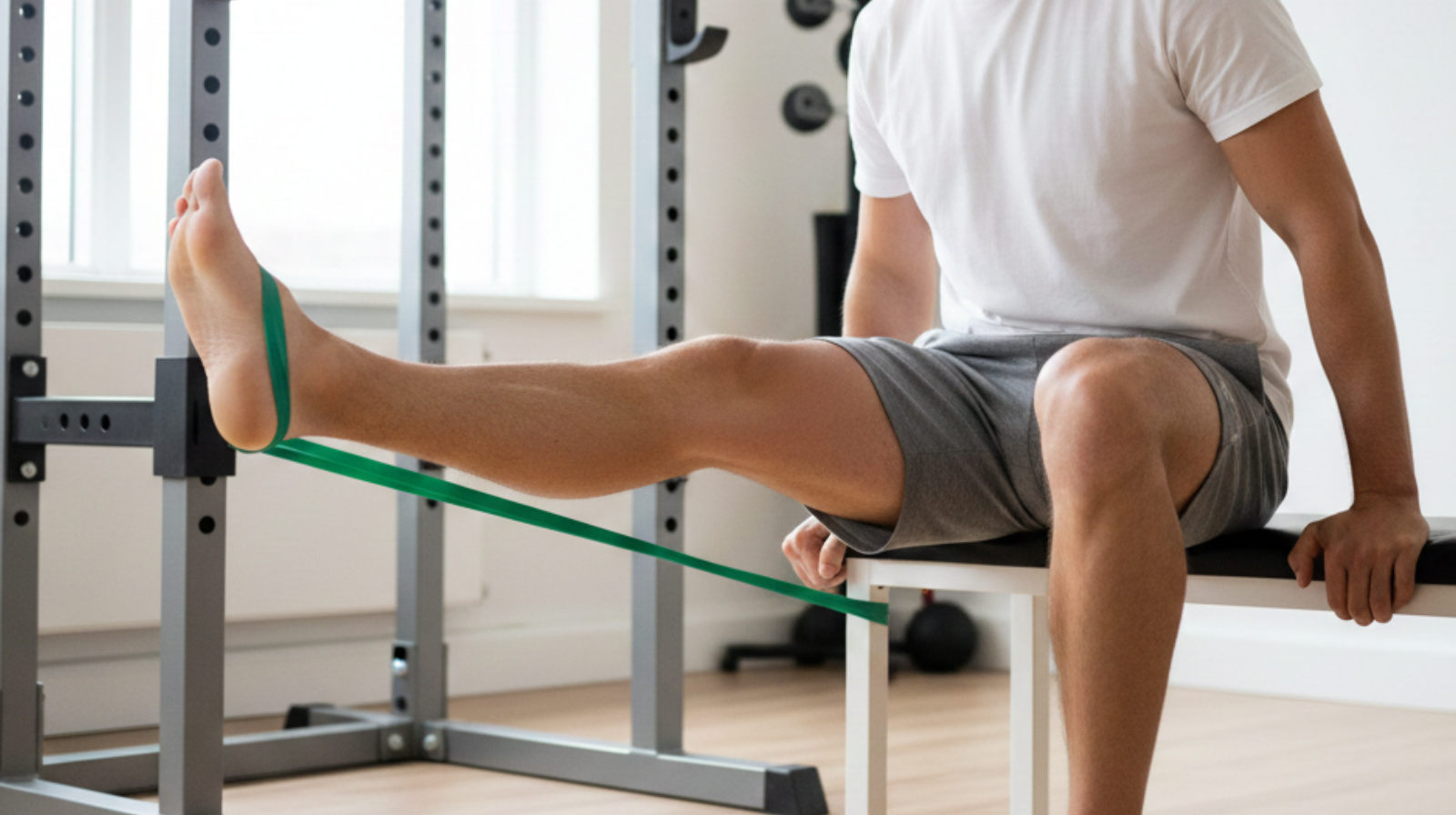
Dorsiflexion targets the muscles that lift the foot upward.
Anchor the band to a sturdy object and loop it over the top of your foot. Sit with your leg straight and the band pulling forward.
Key points include:
- Pulling the toes toward your head
- Keeping the heel down
- Controlling the movement both forward and back
Ankle inversion with a band
Inversion strengthens the muscles along the inner ankle that help guide foot position.
Loop the band around the ball of your foot and position the other leg to create resistance across the band.
Remember to:
- Turn the foot inward against the band
- Move slowly and smoothly
- Keep the knee and hip still
Ankle eversion with a band
Eversion works the muscles along the outer ankle that help prevent rolling.
With the band around the ball of your foot, route the band so it resists outward movement.
Focus on:
- Turning the foot outward with control
- Avoiding quick or jerky motion
- Returning slowly to the start position
Programming and progression
Consistency and control matter more than heavy resistance.
Common guidelines include:
- Plantarflexion and dorsiflexion: 3 sets of 10 reps, 3 days per week
- Inversion and eversion: 6 to 12 reps, repeated as tolerated when prescribed
- Progression: Increase resistance only when all reps feel smooth and pain free
Never rush progression or sacrifice form.
Safety and stop rules
These exercises should feel controlled, not painful.
Keep these rules in mind:
- Stop immediately if pain occurs
- Avoid snapping the band back
- Keep the rest of the leg still to prevent compensation
If symptoms worsen, seek professional guidance before continuing.
Conclusion
A resistance band for ankle strengthening offers a simple and effective way to improve ankle control, stability, and confidence. By focusing on the four essential movements and progressing carefully, you support better movement and long-term joint health.