
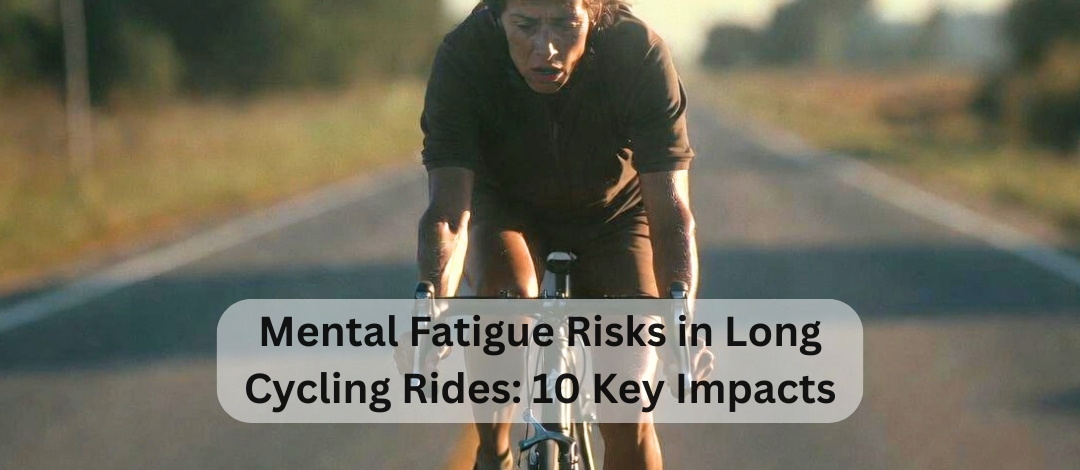
Long cycling rides are often seen as a test of physical strength, but the real challenge usually shows up in the mind. Hours on the saddle can quietly drain focus, patience, and emotional balance before the legs ever give out.
Long rides can dull concentration, making it harder to stay alert and react quickly. Judgment may slip, leading to poor choices about speed, effort, or road situations. The ride can feel harder than it should, even if the body is still capable. Lack of food, fluids, or rest causes these effects to appear sooner and feel stronger.
This article explains how mental fatigue develops during long rides, the risks it creates, and the early warning signs every cyclist should know.
Mental Fatigue Risks in Long Cycling Rides: 10 Key Impacts

Mental fatigue during cycling comes from prolonged focus, decision-making, and emotional control over many hours. It is not about muscle soreness or heart rate but about how the brain handles sustained effort.
For endurance cyclists, mental fatigue can quietly limit performance by draining attention and motivation. Long rides demand constant awareness of speed, terrain, traffic, and body signals. Over time, this steady mental load wears down cognitive and emotional systems.
The key difference between mental and physical fatigue is that the body may still function well while the mind struggles. This mismatch often leads to poor judgment and increased risk late in a ride.
Reduced Concentration and Attention Decline
Extended ride duration makes it harder to stay mentally sharp. Focus naturally fades when the brain is asked to stay alert for hours without rest.
Common effects include:
- Difficulty maintaining attention on the road
- Missed signs, signals, or surface changes
- Slower reactions to sudden obstacles or traffic shifts
As concentration drops, even familiar routes can feel more demanding and unpredictable.
Impaired Decision-Making During Extended Rides
Mental fatigue directly affects judgment and problem-solving. When the brain is tired, decisions become slower and less accurate.
This often shows up as:
- Poor pacing that leads to early burnout
- Delayed responses to mechanical issues or weather changes
- Increased risk-taking when caution is needed most
Small mistakes made under mental fatigue can quickly turn into larger problems on long rides.
Emotional Dysregulation and Mood Changes
Prolonged mental strain can disrupt emotional balance. Cyclists may notice mood changes that feel sudden or out of character.
Common emotional effects include:
- Irritability or frustration over minor issues
- Decreased motivation to keep riding
- Feelings of overwhelm or mental burnout
These mood shifts can drain enjoyment and make the ride feel heavier than it should.
Increased Perception of Effort and Mental Strain

Mental fatigue changes how hard a ride feels. Even when power output stays steady, effort can feel much higher.
This often includes:
- Rides feeling harder without a physical cause
- Heightened awareness of discomfort or pain
- Faster buildup of overall exhaustion
When the mind is tired, the body follows more quickly.
Decline in Situational Awareness and Safety Risks
Mental fatigue is closely tied to cycling safety. As awareness drops, risks increase even on familiar roads.
Key concerns include:
- Reduced awareness of surroundings
- Difficulty processing multiple stimuli at once
- Higher likelihood of near-misses or accidents
Staying safe requires mental clarity, not just physical skill.
Cognitive Overload from Environmental Stressors
Long rides expose cyclists to constant external demands. Each one adds to mental fatigue over time.
Common stressors include:
- Continuous navigation and route monitoring
- Traffic density and urban riding pressure
- Weather changes, terrain variation, and sensory noise
When these factors stack up, cognitive overload sets in faster.
Loss of Motivation and Mental Endurance Breakdown
Mental endurance can fail before physical endurance does. Late in long rides, disengagement becomes more likely.
This may look like:
- Mentally checking out during later stages
- Difficulty staying focused on goals
- Increased temptation to cut rides short
Once motivation drops, maintaining rhythm and purpose becomes much harder.
Long-Term Mental Fatigue Accumulation from Repeated Long Rides
Mental fatigue does not always reset overnight. Repeated long rides can create lasting cognitive strain.
Long-term effects include:
- Ongoing mental exhaustion between rides
- Reduced enjoyment and growing burnout
- Declining consistency and motivation over time
Without recovery, mental fatigue can quietly derail progress.
Recognizing Early Warning Signs of Mental Fatigue
Catching mental fatigue early helps prevent bigger problems. Awareness is one of the most effective tools cyclists have.
Early signs include:
- Trouble staying alert or focused
- Negative self-talk or rising irritability
- Loss of motivation despite physical capability
Recognizing these signals allows for smarter pacing, rest, and recovery choices.
Conclusion
Mental fatigue risks in long cycling rides affect focus, safety, mood, and long-term enjoyment just as much as physical strain. By understanding how mental fatigue develops and recognizing early warning signs, cyclists can protect performance, stay safer on the road, and keep long rides rewarding rather than draining.