
Long rides do not fail because of weak legs. They fail because the body slowly runs out of what it needs to keep working smoothly.
Electrolytes help your body stay hydrated, keep muscles contracting smoothly, and support nerve signals during long rides. As you sweat, these minerals are lost and must be replenished to avoid fatigue and cramps.
Without enough electrolytes, power and coordination can drop even if you drink plenty of water. Proper intake helps you ride longer, stronger, and more comfortably.
This article explains what electrolytes are, how they affect endurance cycling, when to take them, and how to avoid common mistakes.
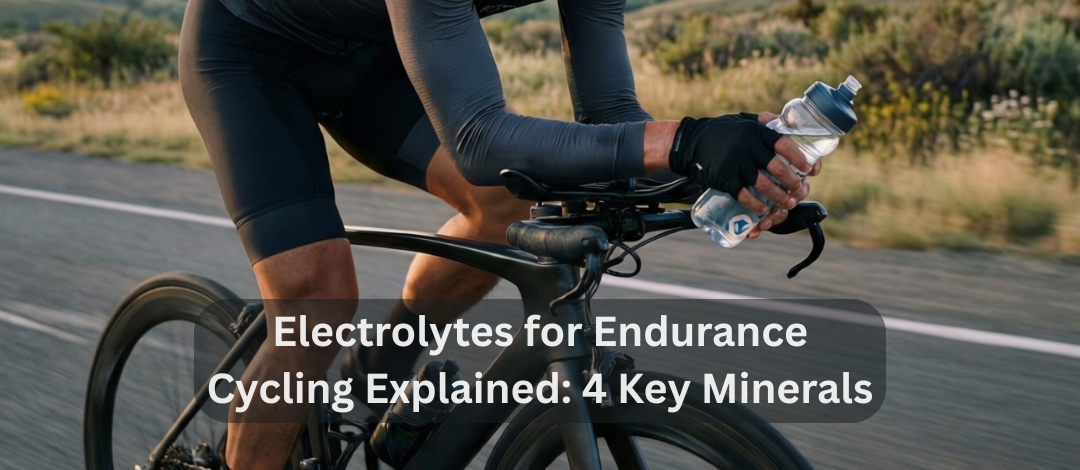
Electrolytes for Endurance Cycling Explained: 4 Key Minerals

Electrolytes are minerals that dissolve in fluid and carry an electrical charge. In cycling, they help the body manage hydration, muscle contractions, and nerve communication.
During endurance rides, steady sweat loss makes electrolytes more important. As time passes, even small imbalances can affect performance and control.
Primary Electrolytes Relevant to Endurance Cycling
Several electrolytes matter during long rides, but four play the biggest roles.
Sodium
- Regulates fluid balance inside and outside cells
- Supports nerve signaling and muscle contraction
Potassium
- Helps muscles contract smoothly
- Supports normal heart rhythm and reduces cramp risk
Magnesium
- Assists neuromuscular control
- Helps limit fatigue during prolonged efforts
Calcium
- Enables muscle contraction
- Supports nerve transmission under sustained load
Electrolyte Loss During Endurance Cycling
Sweat is the main way electrolytes leave the body. The longer and harder you ride, the more you lose.
Loss rates vary based on several factors:
- Duration of the ride
- Intensity and power output
- Heat and humidity
- Individual sweat composition
Two riders on the same route can lose very different amounts of sodium and fluids.
Impact of Electrolyte Imbalance on Performance
Dehydration and electrolyte depletion are not the same. You can drink enough water and still perform poorly if your electrolyte levels are low.
Common signs of imbalance include:
- Muscle cramps or twitching
- Premature fatigue
- Reduced power output
- Poor coordination and focus
These symptoms often appear late in rides, when correcting them becomes harder.
Sodium as the Critical Electrolyte for Endurance Cycling
Sodium is the most important electrolyte for long-distance cycling. It is lost in the greatest amount and has the biggest effect on hydration.
Sodium helps the body absorb and retain fluids. Without enough sodium, water intake becomes less effective. It also helps prevent hyponatremia, a condition caused by overly diluted blood sodium levels during long efforts.
Electrolyte Intake Timing

Timing matters as much as quantity when managing electrolytes.
Pre-ride
- Establish baseline electrolyte levels
- Support hydration before sweat loss begins
During ride
- Use a continuous replacement strategy
- Match intake to sweat rate and conditions
Post-ride
- Replenish losses to support recovery
- Restore normal muscle and nerve function
Electrolyte Delivery Methods
Electrolytes can be consumed in different forms, each with advantages.
- Sports drinks offer fluids and electrolytes together
- Electrolyte powders or tablets allow adjustable dosing
- Capsules provide concentrated sodium without extra liquid
Absorption is similar, but practicality varies based on ride length, heat, and personal preference.
Electrolytes vs Plain Water in Endurance Cycling
Water alone works for short rides. For endurance cycling, it often falls short.
Plain water can dilute blood sodium levels during heavy sweating. This reduces plasma volume and may lower performance. On long, hot, or intense rides, water alone usually cannot replace what is lost.
Individualization of Electrolyte Strategy
There is no single electrolyte plan that works for every rider.
Electrolyte needs vary due to differences in sweat sodium concentration. Riders should adjust intake based on:
- Ride conditions such as heat and elevation
- Personal cramping history
- Performance feedback from past rides
Testing and small adjustments lead to better long-term results.
Common Electrolyte-Related Mistakes in Endurance Cycling
Many endurance issues come from avoidable errors.
- Under-consuming sodium during long rides
- Over-diluting fluids with excessive water intake
- Inconsistent intake instead of steady replacement
Correcting these habits often leads to noticeable improvements.
Conclusion
Electrolytes are a foundation of endurance cycling performance, not an optional extra. Understanding how they work, especially sodium, helps riders stay hydrated, maintain power, and finish strong. With a personalized strategy and consistent intake, long rides become more predictable and more enjoyable.