
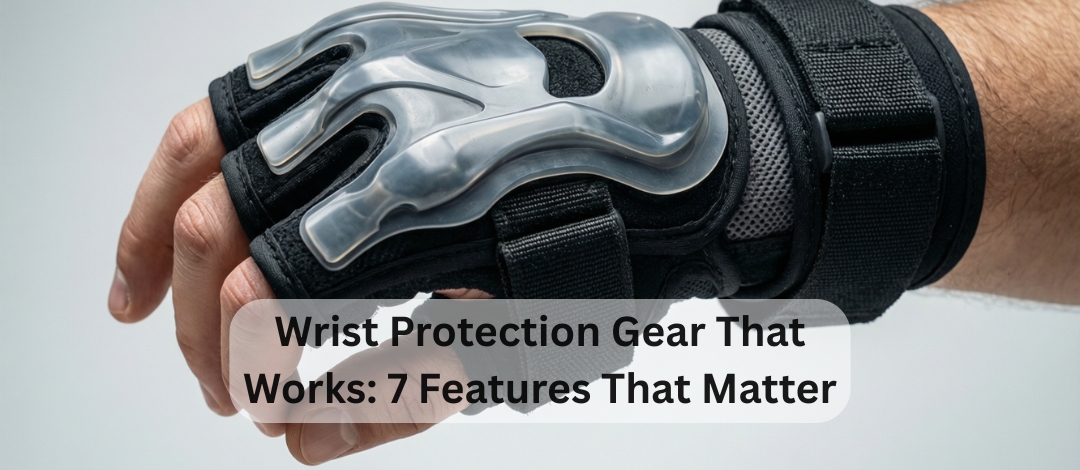
A wrist injury can happen in seconds but take months to heal. Whether you ride, lift, skate, or spend long hours typing, your wrists handle more stress than you may realize. The right protection can mean the difference between a minor scare and a serious setback.
Wrist protection gear is built to control motion, absorb shock, and support the joint without limiting natural hand movement.
Effective designs help prevent dangerous bending during falls, stabilize weak wrists, distribute impact across stronger areas, and support muscles during repetitive strain.
When these elements work together, the result is protection that feels secure rather than restrictive.
This guide explains what wrist protection is meant to do, the features that truly matter, the types worth considering, and how to choose gear that keeps you protected without sacrificing comfort.
Wrist Protection Gear That Works: 7 Features That Matter

Wrist protection is not just for extreme athletes. Anyone who puts pressure on their hands can benefit from reliable support. Good gear acts like a safety net for one of the body’s most fragile joints.
Here is what effective wrist protection is built to do:
- Prevent hyperextension during falls, which is one of the most common causes of fractures
- Stabilize weak or previously injured wrists so they are less likely to give out under stress
- Reduce impact force on bones and ligaments by spreading the energy across stronger surfaces
- Support joints during repetitive strain activities like lifting, cycling, or desk work
When protection performs these roles well, it lowers injury risk while helping you stay active and confident.
Key Features That Make Wrist Protection Effective
Not all wrist gear offers the same level of safety. The difference often comes down to construction details that many people overlook.
Rigid Support Structure
A strong frame is the backbone of dependable wrist protection. Without it, the gear may compress during impact and fail when you need it most.
Look for designs that include:
- Hard splints on both sides to limit unsafe bending
- Anatomically shaped braces that follow the wrist’s natural angle
- Reinforced palm plates that disperse shock instead of concentrating it
These features help maintain alignment when a sudden force hits.
Secure Closure System
Even the best guard cannot protect you if it shifts out of place. A reliable closure keeps everything stable from the first movement to the last.
Key signs of a secure system include:
- Dual or triple straps that lock the brace in position
- Adjustable tension so you can fine-tune compression
- Hook-and-loop or buckle designs that hold their grip over time
A consistent fit reduces friction and improves overall support.
Impact Absorption
Rigid parts stop dangerous motion, but cushioning handles the shock. Both are necessary for real protection.
Effective padding often includes:
- EVA foam or gel layers that soften sudden blows
- Multi-layer construction to spread force across a wider area
This combination helps protect bones while keeping the brace comfortable enough for longer use.
Proper Fit
Fit is where safety and comfort meet. Gear that is too tight can restrict circulation, while loose gear will not stabilize the joint.
A proper fit should provide:
- Snug support without numbness or tingling
- Full wrist coverage with free finger movement
- Size-specific shaping, which usually performs better than universal sizing
When the fit is right, you almost forget you are wearing protection.
Types of Wrist Protection That Actually Work
Different activities create different risks. Choosing the right type ensures you get protection where it matters most.
Wrist Guards
Wrist guards are built for situations where falls are likely and impact is high.
They are ideal for:
- Skating, skateboarding, and snowboarding
- Riders learning new skills
- Anyone exposed to unpredictable terrain
Most guards feature rigid splints and strong palm protection to redirect force away from the joint.
Wrist Braces
Braces focus more on stability than crash protection. They are commonly used when the wrist needs reinforcement rather than armor.
They work well for:
- Injury recovery
- Weight lifting
- Tasks that involve repeated strain
Many include metal or plastic stays that help keep the joint properly aligned.
Compression Supports
Compression supports are lighter and more flexible. While they do not handle heavy impacts, they can help manage fatigue and minor discomfort.
Best uses include:
- Preventing mild strain
- Encouraging better blood flow
- Providing gentle stabilization during daily activity
Think of them as support rather than defense.
Activity-Specific Effectiveness

Matching your gear to your activity greatly improves protection. One style rarely fits every situation.
Consider these practical guidelines:
- High-impact sports call for hard-shell guards that can handle sudden force
- Weight training benefits from structured wraps or braces that control motion
- Typing and repetitive work are easier on the joints with ergonomic braces
- Post-injury periods often require medical-grade support for safer recovery
Choosing based on risk level is smarter than picking the most popular option.
Materials That Improve Performance
Material quality often predicts how long wrist protection will last and how comfortable it feels during use.
Strong performers usually feature:
- Ballistic nylon or high-denier fabrics for long-term durability
- Breathable mesh panels that reduce heat and sweat
- Antimicrobial liners to help control odor and bacteria
- Lightweight composites that protect without causing arm fatigue
Better materials support both safety and wearability.
Common Failure Points to Avoid
Some wrist gear looks solid at first glance but breaks down quickly. Knowing what to avoid can save you from frustration and injury.
Watch out for:
- Thin plastic splints that bend under pressure
- Weak stitching that fails when straps are tightened
- Overly bulky designs that limit hand control
- Guards that slide during impact, leaving the joint exposed
If a product shows any of these issues, it is worth reconsidering.
Fit and Usage Guidelines
Even high-quality protection needs proper use to deliver its full benefit. A few simple habits can make a big difference.
Follow these smart practices:
- Measure your wrist circumference before buying
- Test grip strength and mobility after putting the gear on
- Replace protection that shows cracks, warping, or deformation
- Wear it consistently during higher-risk activities
Protection only works when it becomes part of your routine.
Conclusion
Wrist protection gear that works combines structure, fit, cushioning, and durable materials to guard one of your most injury-prone joints. By choosing the right type for your activity and avoiding common design flaws, you give your wrists the support they need to stay strong, stable, and ready for whatever comes next.